





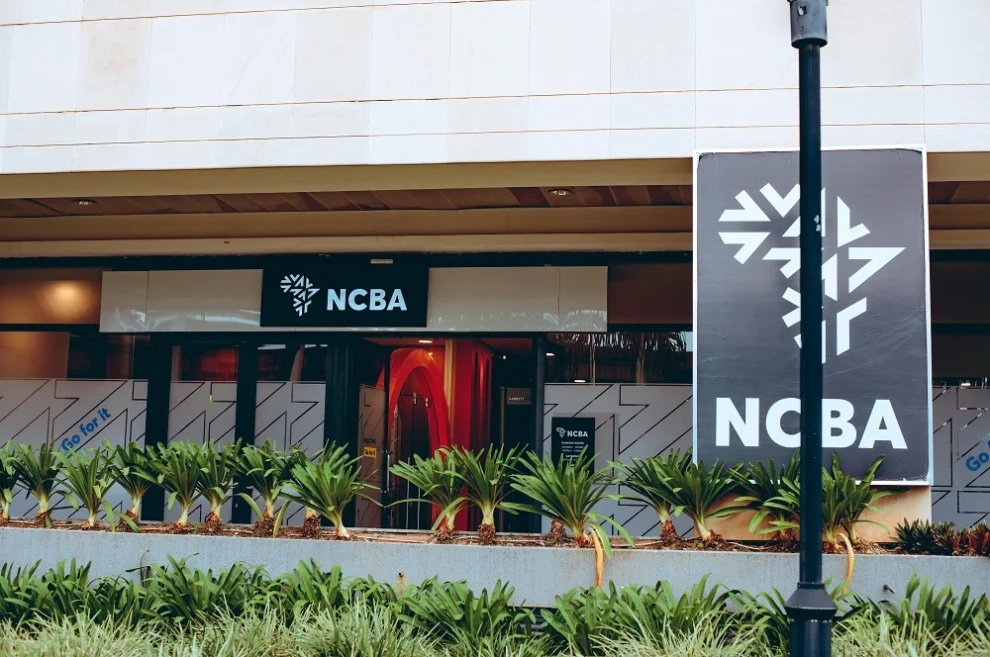

The Office of the Data Protection Commissioner has ordered NCBA Bank Kenya to compensate a customer Sh250,000 after the bank continued sending his private business transaction details and statements to an unrelated third party for months, despite clear requests to stop.
Brian Githaiga opened a business account for Versilia Enterprises at an NCBA branch in 2019. During the account opening process, the bank recorded two email addresses.
One of them was incorrect and belonged to someone else. As a result, sensitive information about the account including transaction alerts and statements was routinely emailed to that third party.
The third party contacted NCBA as early as June 2023 to report that she was receiving financial data for an account she did not own.
Githaiga himself formally requested the bank to delete the wrong email address in July 2023. Yet evidence presented to the regulator showed that the bank was still sending his financial information to the incorrect address as late as February 2024 seven months after the deletion request.
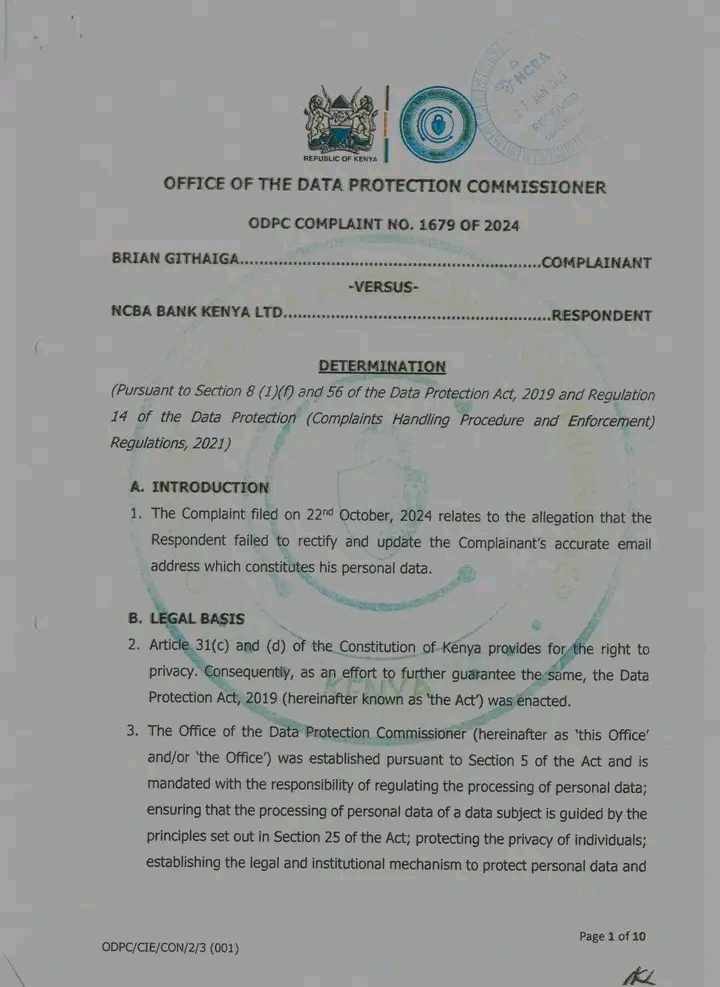
NCBA told the Office of the Data Protection Commissioner that it had executed the deletion in July 2023. The bank could not, however, explain why the data continued to reach the wrong recipient for months afterward.
The ODPC found that NCBA had negligently violated Githaiga’s right to erasure under Section 40 of the Data Protection Act, 2019.
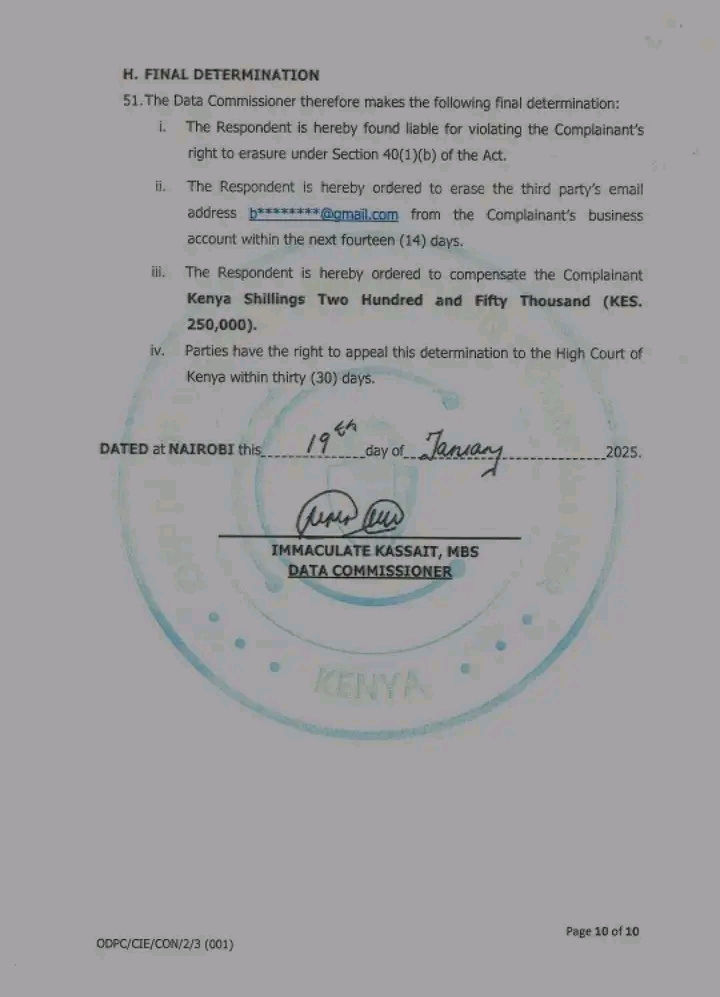
Data Commissioner Immaculate Kassait ordered the bank to erase the third party’s email from the account within 14 days and to pay the customer Sh250,000 in compensation.
The determination was issued in January 2025 under ODPC Complaint No. 1679 of 2024. Reports later in 2026 indicated that the compensation had still not been paid at that time.
The case highlights a basic failure in data handling. A bank is expected to maintain accurate customer records and to act promptly when a customer exercises the right to have incorrect personal data erased. In this instance, both the account holder and the unintended recipient alerted the bank.
The problem persisted for an extended period.
The regulator concluded that NCBA either failed to implement the correction properly or did not verify that the change had taken effect.
For customers, the practical risk is clear. Business transaction details and account statements are sensitive. When they are sent to the wrong person for months, the exposure is real even if no immediate financial loss is claimed. The ODPC’s order underlines that banks cannot treat such errors as minor administrative slips.
Under the Data Protection Act, the right to erasure carries legal weight, and failure to respect it attracts liability.NCBA has not publicly detailed the internal steps it took after the determination. The case remains one of several privacy-related findings against the bank in recent years, but this particular ruling turns on a straightforward, prolonged failure to correct a known error in a customer’s contact details.














Add Comment