




For more than a decade, a single name has quietly lingered at the center of Kenya’s road construction industry, surviving scandal after scandal while the nation’s infrastructure continues to bleed public funds.
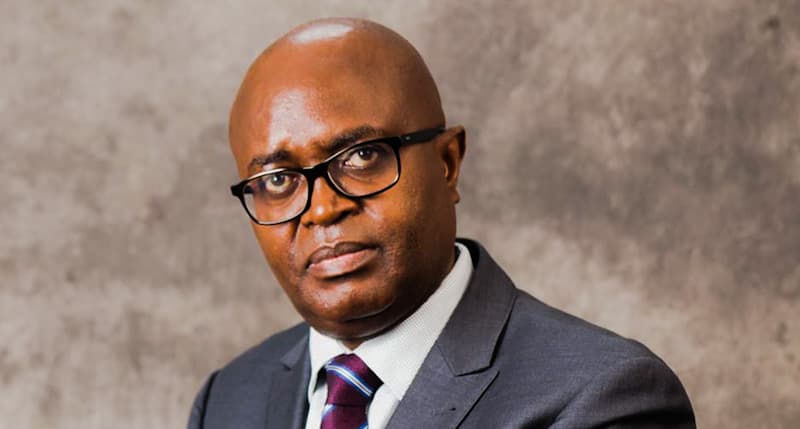
Silas Murira Kinoti, the Director General of the Kenya Urban Roads Authority, has become something of an enigma in Kenyan public service, a man who has weathered parliamentary grillings, auditor general queries, activist court petitions, and even an ongoing Ethics and Anti-Corruption Commission investigation, all while maintaining a posture of serene invulnerability.
His story is not merely about one individual, but about a system that appears structurally designed to protect its own, a system where petitions are filed and forgotten, where investigations open and quietly stall, and where the machinery of accountability produces abundant motion but rarely any consequence.
At the heart of the allegations now swirling around Kinoti is what insiders describe as a sophisticated proxy architecture, a web of shell companies registered in the names of relatives and trusted associates, designed to keep the Director General’s name off every piece of paper while allowing him to benefit from the lucrative contracts flowing through KURA.
The most prominent figure in this alleged network is Henry Muriira Mbaabu, the founder of Interlink Petroleum Limited, a company that trades in bitumen, the lifeblood of road construction.
On paper, Mbaabu is an indigenous entrepreneur who built a petroleum business from the ground up, but multiple senior sources within KURA, speaking at considerable personal risk, describe him as the operational face of what they term an extortion machinery, one that operates with the explicit blessing of Kinoti.
According to these insiders, contractors working on KURA sites across Kenya are routinely leaned on for cash facilitation fees and kickbacks under the implicit threat of payment delays, withheld progress approvals, or sudden compliance issues that materialize from nowhere, problems that conveniently vanish once payment is made.
The elegance of this system lies in its resilience under scrutiny. When questions arise, the proxy companies exist independently, with real registration documents and real directors, making the beneficial owner almost impossible to trace through any public registry.
It is a system that critics argue violates Chapter Six of Kenya’s Constitution, which prohibits state officers from engaging in any business that creates a conflict of interest with their public duties, yet the provisions are widely flouted through what has become known as the proxy architecture.
Interlink, insiders say, functions as the Special Purpose Vehicle at the apex of this structure, its diversified commercial portfolio in petroleum, rice, sugar, and general trading providing the perfect laundry mechanism for moving value extracted from the road construction chain.
The company’s shareholder links to what is described as the “who is who from Meru and Tigania” extend the political insurance policy well beyond Kinoti himself, connecting the operation to senior elected officials from Meru County whose names circulate in internal discussions but whose formal links remain publicly undocumented.
To understand how Kinoti has survived for so long, one must look at the history of his appointment.
He joined KURA in 2009 as Manager of Roads, rising to General Manager for Planning and Environment before assuming the role of acting Director General in September 2015.
Remarkably, he remained in an acting capacity for nearly five years until Transport Cabinet Secretary James Macharia formally confirmed him as Director General in June 2020, on a three-year contract renewable once.
That four-year delay in filling the position substantively is itself telling, as acting directors, lacking the security of formal tenure, are often more dependent on political protection and more likely to accommodate the demands of those who provide it.
Now, a petition before the Employment and Labour Relations Court argues that Kinoti’s tenure has expired, that his continued presence in office is unconstitutional and unlawful, yet he continues signing contracts and issuing administrative directives as if the law does not apply to him.
The scandals that have attached themselves to Kinoti’s name are numerous and staggering in their scale.
During his tenure, KURA awarded Chinese firm Stecol Corporation contracts worth an estimated Sh19 billion for works across Nairobi, Kajiado, and Kiambu counties, including the upgrading of Outering Road, the construction of the Allsops bridge, and the regeneration of 38 roads in Nairobi’s Eastlands.
Internal sources and industry players raised alarms about systematic contract inflation, with Stecol allegedly engaged not merely for construction but also for design and feasibility studies, a bundling arrangement that eliminated independent oversight of cost projections.
What made this more alarming was that the African Development Bank had concluded a settlement with Sinohydro, Stecol’s parent entity, over fraudulent practices in bidding for contracts, yet despite explicit warnings from AfDB’s Nairobi office, KURA continued awarding Stecol contracts.
The pattern was clear: warnings were issued, investigations were opened, but no consequences ever followed.
The Auditor General has not been silent about KURA’s finances, with successive audit reports flagging the authority’s failure to account for billions of shillings in public funds, with critics citing Sh2.7 billion that KURA has inadequately accounted for across multiple audit cycles.
In November 2024, Kinoti appeared before the National Assembly’s Public Investments Committee to answer allegations of a Sh687 million overpayment to Cementers Construction Company for incomplete road and bridge works along Likoni and Enterprise Roads, works initially contracted at Sh892 million.
The committee members were visibly unmoved by his explanations, yet the investigation, like those before it, produced no criminal consequence for the authority’s leadership.
In 2024, activist Ezekiel Oyugi filed a High Court petition seeking a declaration that Kinoti was unfit to hold public office following alleged procurement irregularities in three road projects collectively valued at Sh13.2 billion, including the Bus Rapid Transit Line 5, the Nairobi Intelligent Transport System, and the Outering Road improvement.
That petition has wound its way slowly through the judicial system without producing any swift accountability.
What is perhaps most revealing is the pattern of how every storm passes without rain.
A complaint is filed with EACC, an investigation is opened, search warrants are secured, evidence is gathered, and then the process slows to a glacial pace.
In May 2026, a petitioner filed a certificate of urgency seeking to compel EACC to conclude its investigations into an alleged Sh11.3 billion corruption scandal involving Kinoti, revealing that EACC had obtained search warrants as far back as June 2025, nearly a year earlier, yet the investigation remained incomplete.
In its 2024-2025 annual report, EACC recorded impressive headline figures of Sh3.4 billion in assets recovered and Sh22.9 billion in illegally acquired assets identified, yet only 12 of 58 corruption cases were cleared for prosecution over one three-month reporting period.
Investigations that should take months stretch into years, search warrants expire, witnesses recant, and the subjects of the investigations remain in their offices, signing contracts as if nothing is amiss.
The suppression of independent journalism has been another critical factor in maintaining this system.
One anonymous EACC staff member told Kenya Insights that even the media is compromised, claiming that all editors in the country are Kinoti’s friends who collect money from him every day, making it hard to expose such things.
Whether or not this sweeping claim is literally accurate, the consequence it describes is real: stories about KURA’s Director General have appeared in fragments over the years, but the long-form investigative treatment that follows the money through the proxy structure and documents the site-level extortion has been largely absent.
The abduction and torture of two online journalists during Kinoti’s tenure over an expose about KURA corruption, carried out by officers from the Special Crimes Unit, represents the most extreme illustration of what happens when the accountability gap is filled by journalists unwilling to be suppressed.
That episode did not result in the prosecution of those responsible, nor did it result in any serious inquiry into the KURA corruption allegations that triggered it.
The political protection dimension of this story cannot be responsibly ignored. Kinoti was appointed by CS James Macharia under the Uhuru Kenyatta administration, and his continuation in office through the transition to the Ruto administration, while his counterparts at KeRRA and KeNHA departed, suggests the maintenance of political accommodation at a level that has insulated him from accountability pressures.
In Kenyan public administration, Director Generals who are genuinely isolated from political protection do not survive the accumulation of audit flagging, activist petitions, media allegations, EACC investigations, and parliamentary grilling that Kinoti has faced over the past decade.
Those who survive are invariably those who are not isolated, those who have cultivated relationships and made themselves useful to the right people in the right places at the right times.
The particular genius of using a petroleum and bitumen company as the operational vehicle for the alleged extortion machinery lies in the nature of bitumen itself.
It is not a discretionary supply in road construction, it is the primary binding material in asphalt, without which roads cannot be built.
Every road contractor working for KURA needs bitumen, and a supplier with influence over a Director General’s office does not need to demand cash overtly.
He can simply price his product at a premium, offer delayed delivery as the alternative, and allow contractors to draw the obvious conclusions. More directly, insiders allege that the Interlink structure enables the extraction of value from contractors through facilitation fees paid in exchange for the smooth processing of payment certificates, with a site manager or engineer who can call a number and have a payment problem resolved within days becoming a valuable intermediary.
The fee for that service, extracted over hundreds of contracts across the country, aggregates into numbers that insiders say are very large.
The fresh allegations reported in this piece are different from previous storms in one important respect: the granularity of the detail now emerging from within KURA itself. Previous allegations were largely external, coming from activists, disappointed contractors, or opposition politicians.
What is new is the volume and specificity of allegations coming from inside the authority, from senior engineers and officers who have observed the machinery at close range and are now willing to provide accounts that go beyond the general and into the operational.
These sources describe specific offices, specific sites, specific conversation patterns, and specific relationship structures, describing Mbaabu’s physical movements through KURA’s Nairobi offices, the implicit understanding that permeates the contractor community about what is required to work in KURA’s sphere without friction, and the mechanism by which Kinoti’s name stays off every piece of paper while the economic benefit flows through pathways too indirect for any procurement auditor to trace.
There is a final dimension to this story that deserves to be stated plainly.
The infrastructure that is allegedly being used as a vehicle for enrichment, the roads, the bridges, the urban corridors of Nairobi and other Kenyan cities, was paid for by ordinary Kenyans through taxes, road levies, and loans contracted in Kenya’s name that future generations will repay.
The contractors who build these roads and who are allegedly forced to pay tribute to access their rightful payment have passed on these costs in their project pricing.
The Kenyan taxpayer, therefore, pays twice: once for the infrastructure itself, and once for the system of extraction that allegedly feeds off it.
The tarmac on Nairobi’s urban roads is not merely a surface, it is a financial instrument, a recurring revenue stream for a small group of people who have positioned themselves between the public purse and the public good.



Add Comment