








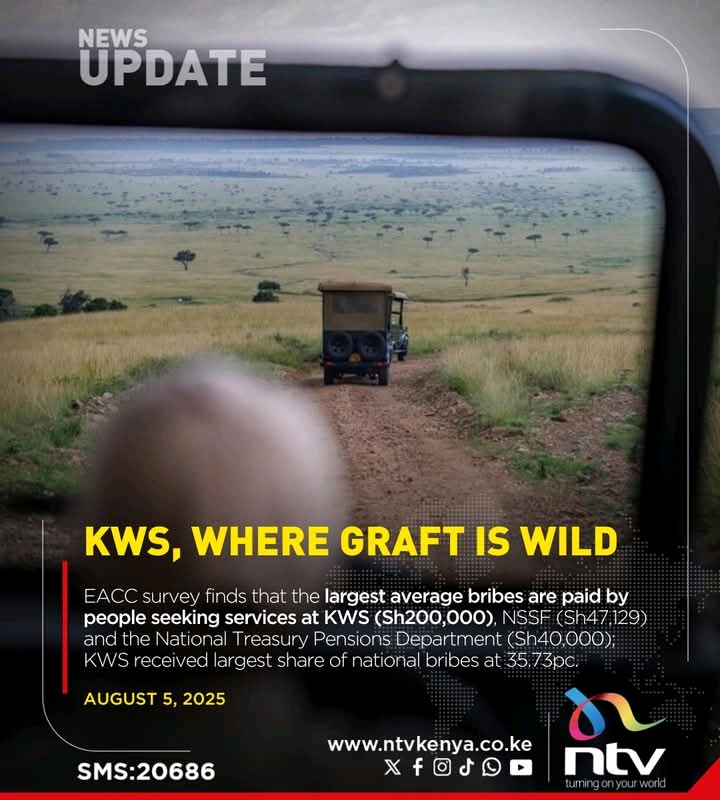
The Kenya Wildlife Service, under the leadership of Dr. Erustus Kanga, has been named the most corrupt institution in Kenya, according to the National Ethics and Corruption Survey released by the Ethics and Anti-Corruption Commission on August 5, 2025.
The report places KWS at the top of the list, citing extremely high bribe amounts especially related to employment. Data shows that job seekers at KWS were forced to pay over KSh200,000 in bribes to secure positions, which is significantly higher than the national average bribe of KSh4,878 reported for the same year.
This high figure means that KWS alone was responsible for 35.73% of all bribe money exchanged in the country, a worrying sign of deep-rooted problems within the agency.
KWS is a critical government agency tasked with protecting Kenya’s wildlife, maintaining national parks, and supporting tourism. Its work is closely tied to national development and environmental sustainability.
The institution also supports thousands of jobs and brings in foreign revenue. For that reason, corruption within the agency can have far-reaching effects beyond the walls of its offices. The 2024 EACC report’s findings suggest that corruption at KWS goes beyond isolated incidents and may be systemic, especially in recruitment where cases of bribery, favoritism, or manipulation of hiring processes appear widespread.
These practices are not just unethical, they also threaten the success of conservation programs by placing unqualified individuals in important roles.
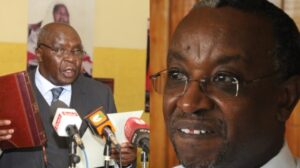
Dr. Erustus Kanga, who was officially appointed as Director General in August 2023, holds a strong academic background in natural resource conservation. He has over two decades of experience in the sector and has led initiatives such as ranger training and rhino translocations. However, despite his credentials, his leadership now faces a serious test.
Although the EACC report does not directly accuse him of taking bribes or being involved in corrupt dealings, it raises concerns about the overall direction of the institution under his watch.
Other separate reports, including those involving procurement and misconduct, have also added pressure on him to take public accountability.
The corruption findings carry a number of consequences. Money meant for protecting animals and managing parks could be lost through illegal payments. This not only weakens conservation efforts but may also damage Kenya’s image as a global leader in wildlife protection.
Tourists, donors, and international partners could lose faith in KWS, resulting in fewer resources and less support. In addition, the public may begin to view the institution as another failed agency, unable to operate without bribery and internal rot.
Experts have called for urgent reforms. These include stricter internal controls, open hiring practices, whistleblower protection, and stronger enforcement of anti-corruption laws. It’s also important to involve local communities who live near wildlife areas, ensuring that they benefit from tourism so they feel encouraged to protect these resources instead of seeing them as a source of conflict or opportunity for bribery.
Dr. Kanga’s knowledge and history in conservation could still play a positive role if he uses his position to clean up the institution and promote transparency.
The EACC’s data paints a clear picture of the problem. Compared to other agencies, KWS stands out not only in the amounts of bribes demanded but also in its total share of national corruption. While many institutions have shown some improvement, KWS remains an outlier.








Add Comment