






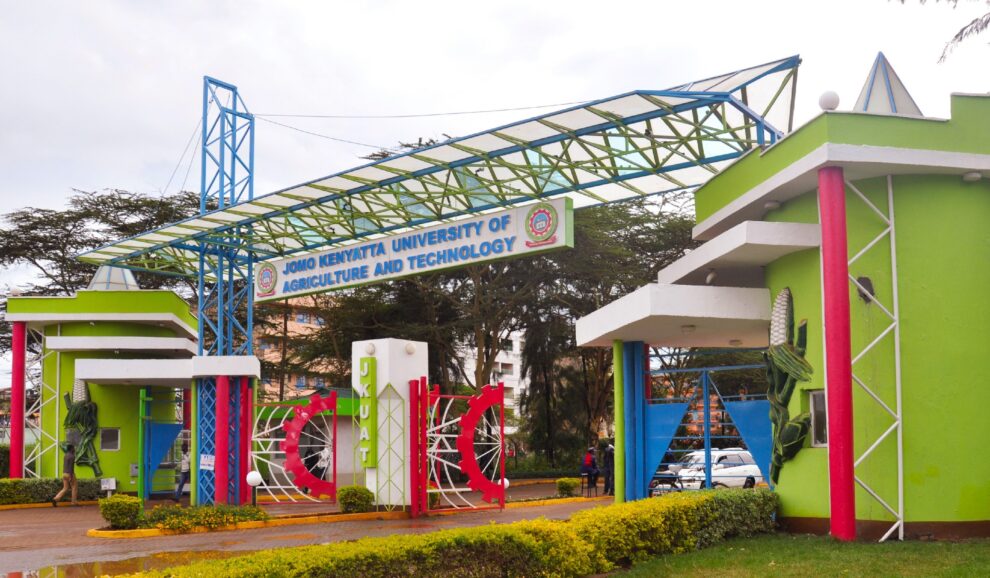

Academic delays at Jomo Kenyatta University of Agriculture and Technology (JKUAT) have raised serious questions about systemic accountability in Kenya’s higher education sector.
This issue is vividly highlighted by the struggles of a young graduate from the university’s School of Medicine, Department of Physiotherapy, whose career prospects have been put on hold due to administrative inefficiencies.
A missing transcript from his second year has become a significant obstacle, leaving him stranded in a competitive job market.
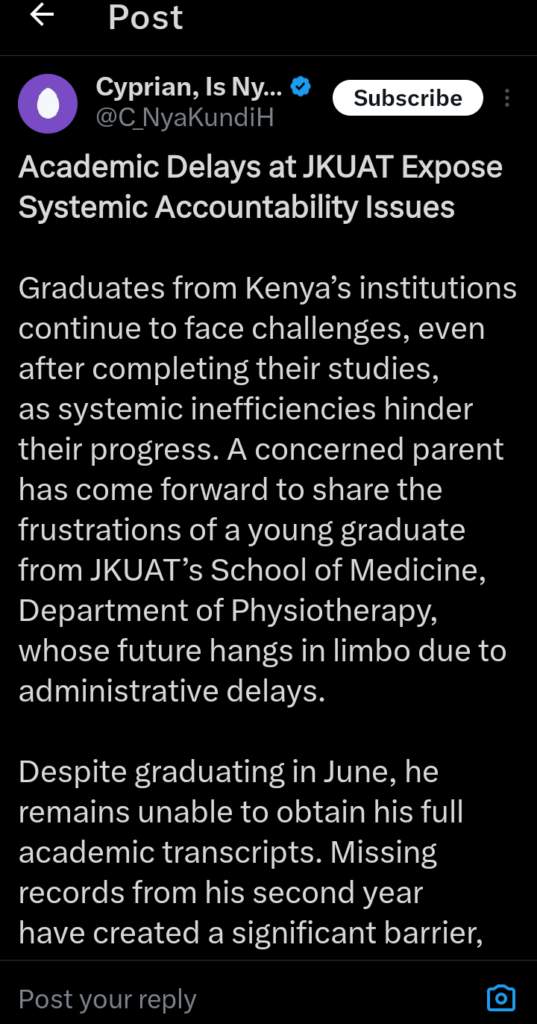
Despite his repeated efforts to resolve the matter with the registrar’s office, no solution has been forthcoming.
Instead, he has been caught in a frustrating back-and-forth, with the registrar claiming that the department failed to forward the necessary marks.
The graduate’s predicament has not only delayed his entry into the workforce but also placed an immense emotional and financial burden on his family.
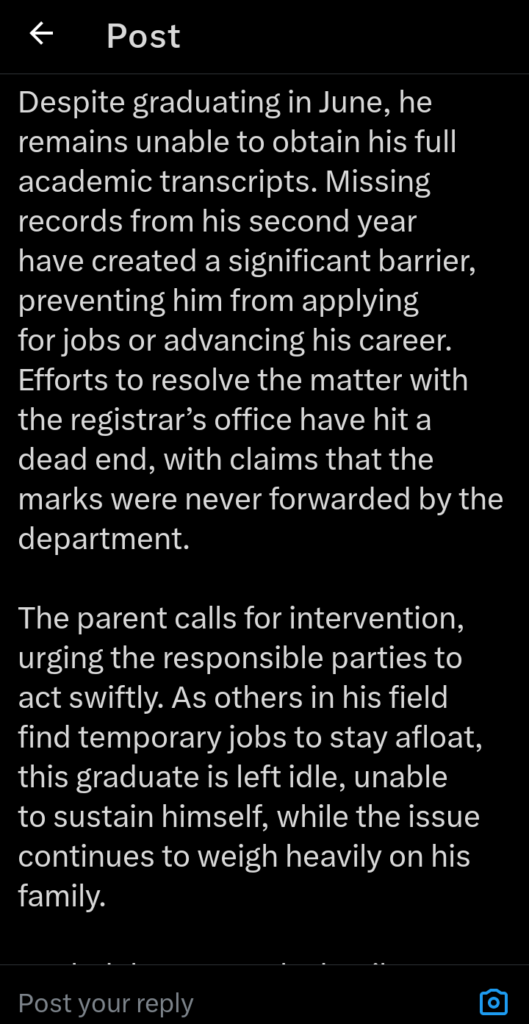
A concerned parent shared their frustrations, describing how the delays have left the young man idle and unable to support himself.
Meanwhile, his peers in the same field are securing temporary jobs to make ends meet, further amplifying the sense of injustice and helplessness.
These delays are not an isolated case but a symptom of a larger accountability crisis within Kenya’s academic institutions.
The parent’s plea for intervention underscores the urgent need for systemic reforms to address the inefficiencies plaguing university administration.
When graduates are unable to access their academic records, it reflects a failure not only of internal processes but also of the commitment to uphold students’ futures.
Such lapses tarnish the reputation of institutions like JKUAT and undermine public confidence in higher education.
The parent’s statement captures the gravity of the situation: “They have just refused to avail his 2nd-year transcript, thereby making it difficult to apply for anything. He is currently unable to apply for any job or do anything; he is just suffering out there because of one or two persons. This thing is eating into my nerves. The boy is stuck since June, doing nothing.”
This case highlights the critical role that academic institutions play in shaping the future of the nation’s youth.
Delays in releasing transcripts not only derail individual careers but also hinder national development by wasting the potential of young professionals.
The responsible parties within JKUAT must urgently address these issues and ensure that administrative inefficiencies do not stand in the way of graduates achieving their goals.
Failure to act will continue to erode trust in the education system, leaving many young Kenyans disillusioned and disadvantaged.














Add Comment