






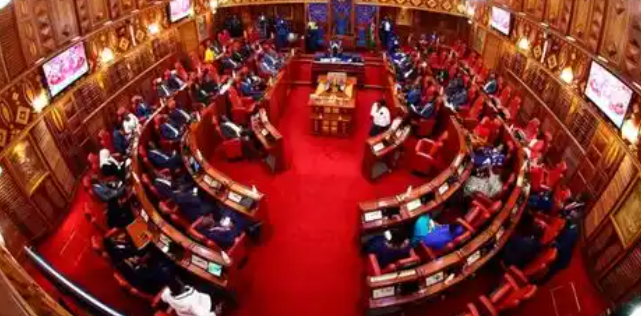

The recent move by the Senate to amend the Public Officer Ethics Act, potentially exempting state officers and their immediate family members from declaring their wealth, has ignited a heated debate across the nation.
Introduced by Senator James Kihara, the proposed changes aim to alleviate what proponents argue is an overly intrusive requirement that hampers the effectiveness of public servants.
However, critics are vehemently opposing the amendment, citing concerns over transparency and accountability in governance.
Senator Kihara, a vocal advocate for the bill, defends his stance by asserting that the current law imposes an unfair burden on state officers and their families.
“Respecting the privacy of our officers is paramount to their ability to serve without unnecessary distractions,” he remarked during the Senate session.
Proponents of the amendment echo this sentiment, contending that the fear of public exposure dissuades competent individuals from pursuing public office, thereby limiting the talent pool available for governance.
Opponents of the bill, including various civil society organizations and anti-corruption watchdogs, argue that the proposed amendment could potentially exacerbate corruption and shield unethical conduct from public scrutiny.
Transparency International’s local chapter has strongly criticized the move, labeling it as a “significant setback in the fight against corruption.”
They emphasize that without stringent wealth declarations, the door could be opened to abuse of power and illicit enrichment at the expense of public funds.
The passage of the bill through the Senate has raised significant concerns about its broader implications for governance and public trust.
Many argue that while respecting personal privacy is important, it should not come at the expense of accountability and the public’s right to know.
The amendment’s fate now rests with the National Assembly, where it is expected to face further scrutiny and deliberation.
The debate surrounding this amendment underscores a fundamental tension in democratic governance: the balance between privacy rights for public officials and the imperative of transparency to prevent abuse of power.
As lawmakers deliberate on the bill, the nation watches closely, hoping for a resolution that upholds both integrity in public office and the trust of the electorate.
The outcome of this legislative process will undoubtedly shape the future landscape of governance and anti-corruption efforts in the country.












Add Comment