






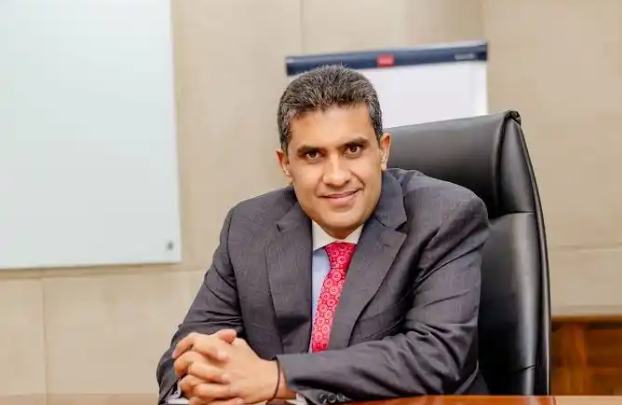

Jayesh Saini, a leading businessman in Kenya’s healthcare sector, has been involved in a number of controversies that have placed him at the center of significant corruption allegations.
As the founder of Clinix Healthcare Ltd and Meridian Medical Group, Saini gained national attention in 2012 when his companies were implicated in a major scandal involving the National Hospital Insurance Fund (NHIF), which was meant to provide outpatient services to government employees.
The scandal first came to light when it was discovered that Clinix had received KSh 202 million from the NHIF for services provided through what were later described as
“ghost clinics.” Many of these clinics either did not exist or were not operational, yet they were accredited by NHIF and received payments despite lacking the capacity to deliver healthcare services.
Investigators revealed that these clinics were accredited without following proper protocols, leading to widespread mismanagement of public funds.
The scale of this scandal was compared to notorious cases like the Goldenberg and Anglo Leasing scandals, which had shaken Kenya in previous years.
In addition to the NHIF scandal, Saini’s pharmaceutical business ventures have also come under scrutiny.
His company, Gesto Pharmaceuticals, was accused of supplying substandard drugs to the Kenya Medical Supplies Authority (KEMSA).
This revelation added further concerns about the quality of healthcare services provided through his various enterprises and raised questions about the role of corruption in Kenya’s healthcare system.
Saini’s business dealings have also attracted attention for their lack of transparency.
His company, Pharma Investment Holdings, which owns a significant stake in Clinix, is registered in the British Virgin Islands, a well-known tax haven.
This fact has heightened suspicions regarding the true nature of his financial operations and whether he is involved in tax evasion or money laundering.
Critics argue that such offshore registrations allow for the concealment of ill-gotten gains, further complicating the efforts of investigators seeking to recover stolen public funds.
In response to the allegations, the Ethics and Anti-Corruption Commission (EACC) launched investigations into the NHIF scandal, focusing on irregularities surrounding the payments made to Clinix and Meridian.
The EACC has been working alongside other government bodies to recover funds lost in the scandal and hold the individuals involved accountable.
However, the legal process has been slow, and critics have pointed out that despite these efforts, Jayesh Saini and others implicated in the scandal have largely managed to evade meaningful consequences.
The influence Saini wields in political and business circles has played a significant role in his continued prominence in Kenya’s healthcare sector.
Despite the serious allegations leveled against him, he has remained active in healthcare provision through his various enterprises.
His ability to navigate the political and legal systems, while under investigation, highlights the broader issue of impunity that characterizes many corruption cases in Kenya.
Saini’s case is emblematic of a larger problem within Kenya’s healthcare system, where the misappropriation of public funds has often undermined the provision of essential services.
For many, the scandals surrounding Saini and his businesses pose the urgent need for reforms aimed at promoting transparency, accountability, and the responsible use of public resources in the healthcare sector.
It remains to be seen whether justice will be served and whether the necessary steps will be taken to prevent similar incidents in the future.











Add Comment