
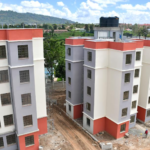




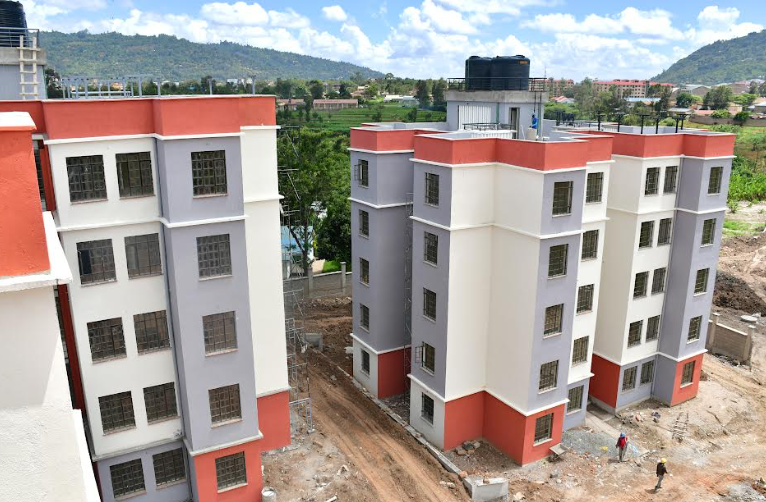

The government’s Affordable Housing Programme is facing fresh questions after an audit uncovered gaps in land ownership documents for hundreds of projects being implemented across the country.
Members of Parliament are now seeking answers from the State Department for Housing and Urban Development after the Auditor General reported that 269 affordable housing projects had no land documentation during the 2024/2025 financial year.
The findings have raised concerns about the legal status of the land being used to construct the housing units and whether future homeowners will encounter difficulties obtaining ownership documents.
According to the Auditor General’s report presented before the National Assembly’s Special Funds Accounts Committee on Thursday, November 12, only 14 affordable housing projects had title deeds.
Another nine had letters of allotment, while 23 had certificates of search. Two projects were also being implemented on community land.
The report further noted that the Affordable Housing Fund had not procured land directly, explaining that construction had mainly taken place on land vested by national government entities and county governments.
“On the statement of your financial position, the value of land has not been declared as the Fund has not procured any land, but has constructed houses based on vested lands by either the National Government entities and County Governments,” the report stated.
During the committee meeting, lawmakers questioned Affordable Housing Board Chief Executive Officer Joe Mutugu and Principal Secretary for Housing and Urban Development Charles Hinga over the missing documents and the steps being taken to address the situation.
The MPs particularly wanted to understand how individual homeowners would eventually receive sectional title deeds where the original land ownership documents were unavailable.
Responding to the concerns, Mutugu acknowledged that some projects lacked the required land documentation.
However, he maintained that incomplete land registration was a longstanding problem affecting public assets across Kenya.
He told the committee that the Affordable Housing Board was working with relevant government institutions to resolve the documentation gaps affecting its projects.
Mutugu disclosed that the Board had written to governors in counties where affordable housing developments had been constructed or were underway on county government land.
According to him, some governors had already signed resolutions to facilitate the preparation and issuance of ownership documents.
“A request has been made to all Governors where AHB has developed or is developing affordable housing projects on County Government land.
The Governors have been in engagement with the State Department for Housing and Urban Development and AHB and have signed resolutions to facilitate production of ownership documents,” he stated.
The CEO also informed lawmakers that Cabinet had approved the vesting of 275 parcels of land in the Affordable Housing Board.
Additionally, relevant ministries, departments and government agencies had been directed to complete the necessary concurrence processes and submit the required documentation.
The findings present another challenge for President William Ruto’s Affordable Housing Programme, which has been promoted as a key solution to the country’s housing shortage, informal settlements and the need for decent homes.
However, the questions raised by MPs place the spotlight on land ownership and the government’s ability to guarantee secure property rights for Kenyans expected to purchase the completed housing units.Create image








Add Comment