


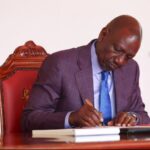



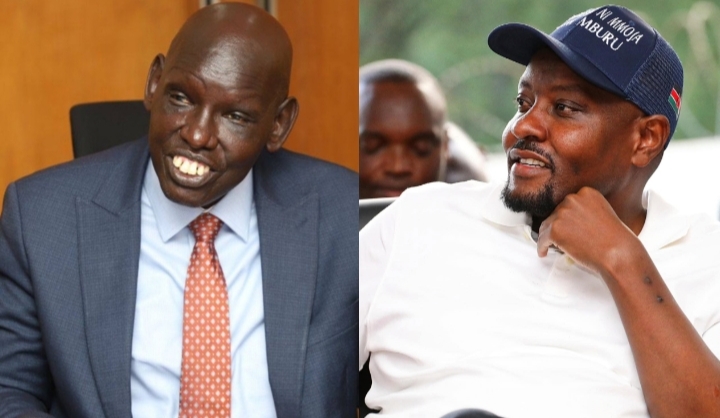

Belio Kipsang remains at the center of renewed scrutiny over the Ruaraka land compensation saga, a case that has become one of the most controversial examples of how public funds can be lost through questionable government transactions.
Years after the payment was made, court decisions have continued to raise serious concerns about how 1.5 billion shillings of taxpayers’ money was approved and released for land occupied by public schools.
The dispute revolves around approximately 13.5 acres of land hosting Ruaraka High School and Drive-In Primary School in Nairobi. In 2017, the Ministry of Education paid businessman Francis Mburu and companies linked to him for the land, arguing that compensation was necessary because the schools had occupied privately owned property for many years.
At the time, Kipsang was serving as Principal Secretary for Basic Education and was involved in the process that led to the payment.However, subsequent court rulings painted a very different picture.
The High Court and later the Court of Appeal found that the compensation was irregular and unlawful. According to the courts, the land had already been surrendered for public use in 1984 and should have remained public property.
The judges concluded that there was no legal basis for compensating private entities for land that had already been set aside for public purposes decades earlier.
The findings have intensified questions about how government agencies handled the transaction. Critics argue that important records and reports showing the land’s true status were either ignored or not given the attention they deserved.
The speed at which the compensation was processed and approved has also remained a point of concern for many observers.
The scandal has attracted significant public attention because of what the money could have achieved if it had remained within the education sector. With schools across the country facing shortages of classrooms, learning materials, and other essential resources, many Kenyans view the loss of 1.5 billion shillings as a major setback to public education.
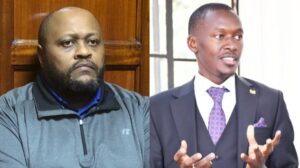
Members of the Mburu family, including Sam Mburu, have also come under public focus because of their links to the companies that received the funds.
While questions continue to be raised about the beneficiaries of the payment, attention has equally remained on the public officials who approved and facilitated the transaction.
The Ethics and Anti-Corruption Commission has since moved to recover the money and pursue accountability for those found responsible.
The agency has indicated that findings relating to public officials could be forwarded to the Director of Public Prosecutions for further action.
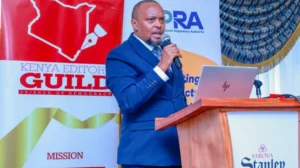
Today, Kipsang serves as Principal Secretary for Immigration and Citizen Services, but the Ruaraka case continues to follow him.
For many Kenyans, the issue goes beyond a single land transaction. It has become a symbol of weak oversight, poor accountability, and the high cost that taxpayers bear when public institutions fail to protect public resources.








Add Comment