






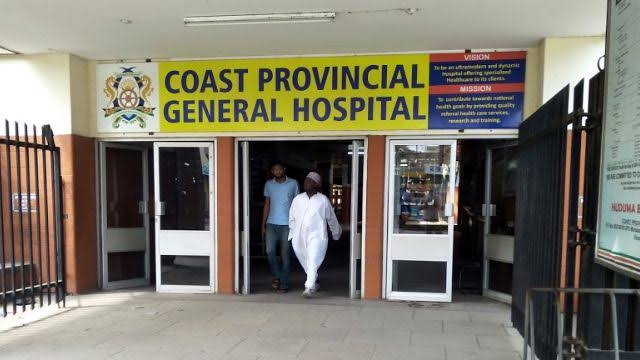

The growing concern around security at Coast General Referral Hospital has exposed serious weaknesses that go beyond ordinary negligence.
What is emerging is a troubling picture of repeated losses, poor accountability, and systems that appear designed to fail.
Patients, staff, and visitors now speak openly about a hospital environment where theft has become expected rather than shocking, and where responsibility is routinely shifted instead of addressed.
At the centre of the issue are reports of high-value public property disappearing from the hospital without resistance.
These include sensitive medical machines used in cancer treatment, equipment that should never leave controlled areas without clear records.
Insiders say the losses run into millions of shillings, yet hospital management has not released a full inventory of what is missing or explained how such equipment passed through security points undetected.
Records, police reports, and internal accounts suggest these incidents follow a pattern that points to planning rather than chance.
Security at the hospital is handled by Dina Security, a private firm owned by Said Abdallah, also known as Saidoh. Staff members allege that despite repeated complaints and internal warnings, the firm continues to operate without meaningful review.
Guards working under the company describe poor pay, long shifts, and lack of basic tools.
Some say they are discouraged from reporting incidents and warned against speaking out.
Others claim supervisors instruct guards to stay silent when theft occurs, creating an environment where losses are normalized.
Documents show that Dina Security has guarded the hospital since the time of former Mombasa Governor Hassan Joho. Several insiders believe political connections have shielded the firm from audits and contract reviews.
Even after incidents that directly affected patient care, county officials have avoided public scrutiny.
Hospital administrators, on their part, continue to dismiss concerns, often blaming careless visitors or isolated incidents, a position that conflicts with the available evidence.
One case that highlights the extent of the problem involves Loice Mwamba, a Nairobi-based businesswoman from Taita County.
On Monday, June 20, 2025, she went to Coast General Referral Hospital during a medical emergency involving her mother.
She arrived at about 4:30 a.m. and parked her Subaru Forester in a designated area within the hospital compound, believing it was safe.
Later that morning, she returned to find the rear left windscreen shattered. Thieves had broken into the vehicle and stolen items valued at over KSh 121,500.
These included a jewellery box containing watches, earrings, chains, and a necklace, a black handbag with KSh 10,000 in cash, an external hard disk, an Oppo phone, an HP laptop, personal documents, and even food items.
When she reported the incident to the guard on duty, he claimed he knew nothing about it.
He said his shift had started at 6:00 p.m. and that no one had informed him about the parked vehicle. He also admitted the area was unsecured.
Ms. Mwamba noted there were no warning signs indicating that parking was at the owner’s risk, raising questions about why the hospital allows public parking in areas without proper protection or disclosure.
Hospital officials advised her to report the matter to the police, which she did at Tononoka Police Station.
The case was recorded under OB number 41/30/6/2025, and she later gave a detailed statement.
Police officers acknowledge that similar cases linked to the hospital exist. They also admit investigations are often stalled by lack of cooperation from hospital security, with guards failing to provide CCTV footage, patrol logs, or usable camera recordings.
Beyond individual cases, sources allege that questionable procurement practices keep Dina Security in place.
They claim contracts are awarded without open competition and that procurement documents remain inaccessible. Complaints against the firm rarely move forward, audits stall, and disciplinary actions fade away.
Guards who raise concerns reportedly face transfers or job loss.
Senior staff members say valuable items disappear and management looks away.
They allege that when questioned, Saidoh responds dismissively and denies responsibility, an attitude they believe is enabled by powerful protection.
County officials have also failed to explain how critical equipment leaves the hospital without alarms, escorts, or clear sign-offs.The result is a loss of trust in a public institution meant to protect life. Experts now call for an independent audit of all security contracts, a forensic inventory of missing equipment, and suspension of firms linked to repeated failures.
They argue that hospital managers, county leaders, and law enforcement must act decisively.
Until clear accountability is enforced, theft at Coast General Referral Hospital will continue to harm patients, waste public resources, and weaken confidence in public healthcare services.













Add Comment