






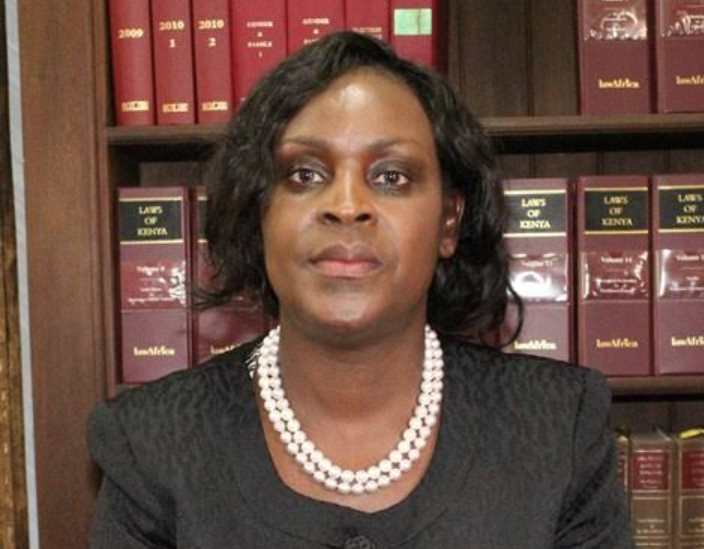

Justice Dorah Chepkwony, a Kenyan High Court judge, is currently facing a serious complaint of gross misconduct and misbehavior.
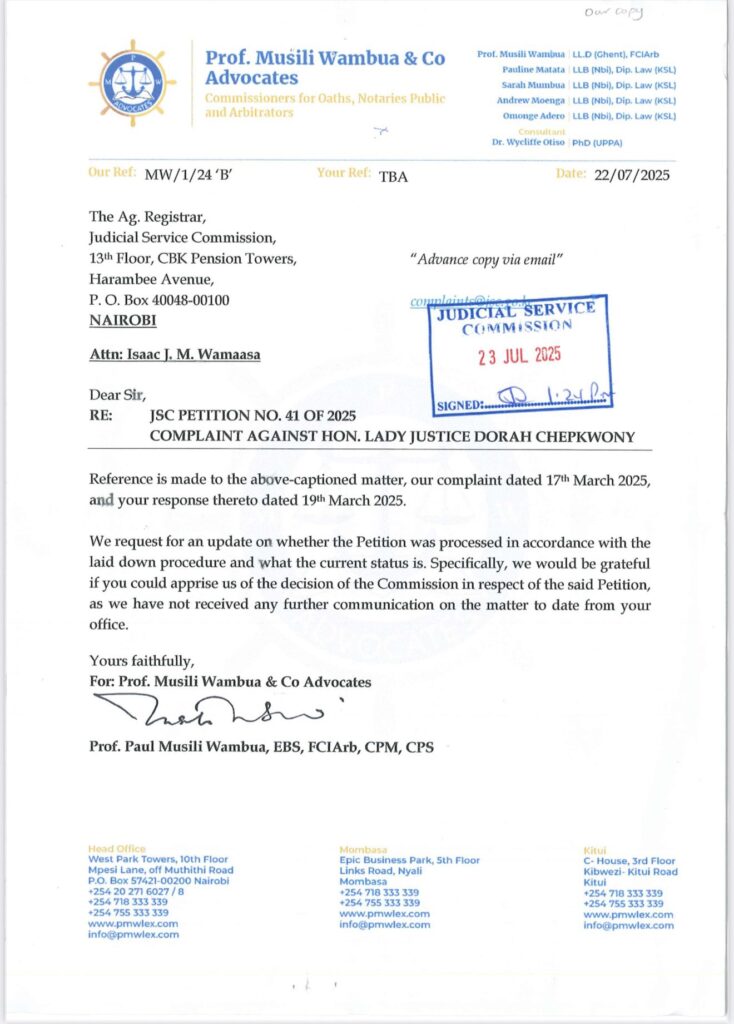
On August 8, 2025, Nelson Havi, a well-known Kenyan lawyer and former president of the Law Society of Kenya, publicly revealed that he had received a formal complaint against her.
The allegations include delayed rulings and forum shopping, which is the practice of manipulating case assignments to achieve favorable outcomes. These accusations raise concerns about judicial fairness and integrity.

The complaint centers around a case identified as Milimani HCC No. 4 of 2025, involving Francis Mwangi Ndegwa. The ruling in this case was supposed to be delivered on September 9, 2024, but as of March 17, 2025, it had not been issued.
The delay has caused prejudice to the petitioner, which the complaint argues is unacceptable in the justice system. Besides the delay, the complaint also accuses Justice Chepkwony of forum shopping, an unethical practice that undermines the trust in the judiciary.
Nelson Havi, despite being a relative of Justice Chepkwony, stressed the importance of cleaning up the judiciary. He pointed out that reform must continue even when it is difficult on a personal level.

His statement suggested that the complaint is part of a wider effort to hold judges accountable and improve judicial standards. Havi also hinted at further actions targeting the Judicial Service Commission (JSC), indicating that problems in the judicial system may go beyond individual judges.
This complaint is part of an ongoing judicial petition, JSC Petition No. 29 of 2023, which has been temporarily stopped by a High Court order pending a hearing set for April 7, 2025. The court is expected to give a ruling on the matter by April 30, 2025.
This delay in the judicial process reflects the tension and complexity involved in handling complaints against judges in Kenya.

Justice Dorah Chepkwony has had a long career serving in various judicial roles. She was born in Kakamega County and has been involved in several important cases over the years.
While there have been no clear scandals directly linked to her, some of the cases she handled attracted public attention and debate.
One notable case was the Mumias Sugar dispute, where Justice Chepkwony found officials from the Sarrai Group guilty of contempt of court for disobeying orders.
This ruling caused a legal battle with the company, and her involvement in the case ended after she was transferred, a move that some interpreted as connected to tensions with powerful business interests.
Another high-profile case was the acquittal of Hania Sagar, the widow of the late Aboud Rogo, on terrorism charges. Her ruling was that there was insufficient evidence to convict, a decision that sparked debate due to the sensitive nature of the case.
Justice Chepkwony has also been involved in other cases like directing the extradition of the Akasha brothers related to international drug trafficking and overturning a wrongful conviction in the case of Daniel Wanyeki, who had spent 17 years in jail.
These cases show a judge who has handled complex and sensitive matters, but none have been officially declared scandals.
The current complaint highlights issues that many Kenyans are concerned about regarding the judiciary.
Delayed rulings and unethical practices like forum shopping can harm public confidence in the justice system. It is important that the allegations are carefully investigated to ensure accountability and fairness.
The Judicial Service Commission, responsible for overseeing judges, is facing pressure to address such complaints swiftly and transparently.
The broader context includes calls for judicial reform across Kenya, with some leaders and lawyers demanding higher standards and the removal of judges who fail to uphold justice.
This case involving Justice Dorah Chepkwony is one example of the challenges Kenya faces in reforming its judicial system. How it is handled could set an important precedent for future judicial accountability.
For further information, Nelson Havi’s post and legal documents related to the case are publicly available, along with the official profile of Justice Chepkwony on the judiciary website. These sources provide more context for those interested in the ongoing judicial reforms in Kenya.














Add Comment