








Nairobi Governor Johnson Sakaja is once again at the center of public outrage after violent protests on June 25 and 26, 2025, left shops in the Old Town Center looted and livelihoods destroyed.
Traders like Tom Kamau and Susan Wanjiru are counting millions in losses after their businesses were ransacked. Yet the biggest question that remains is how such chaos unfolded so easily in the heart of the city without any clear resistance from the very systems meant to protect the people.
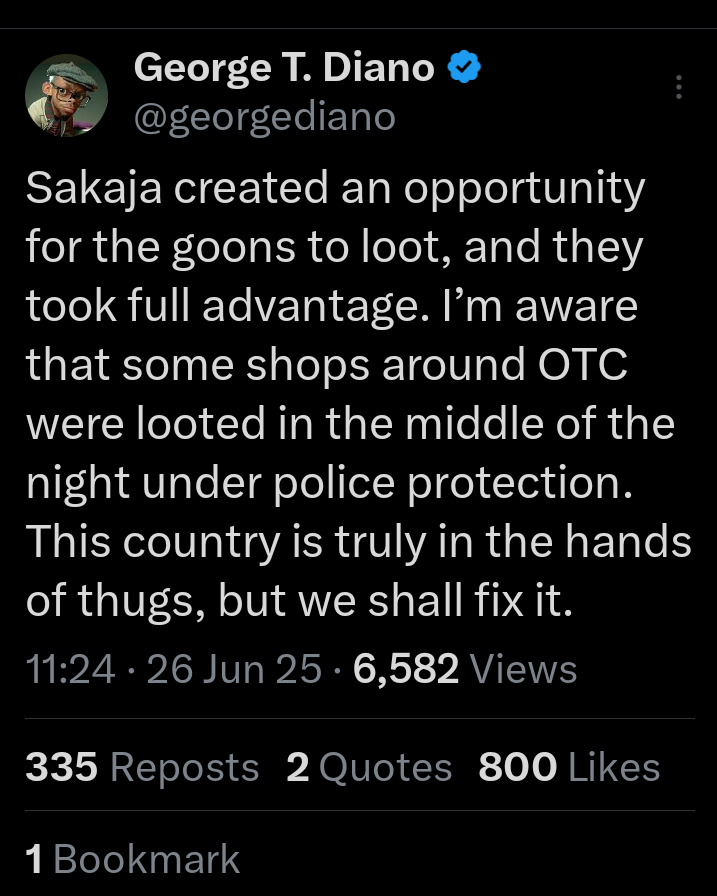
George Diano, a well-known political commentator, posted a strong accusation on X saying Sakaja created the opportunity for looters to act, suggesting the theft happened under police watch.
His claims were supported by disturbing reports from the Social Justice Centre Working Group, which stated that gangs shouting Sakaja’s name were seen attacking peaceful demonstrators while police officers did nothing.
Videos and statements from the protests paint a picture of a governor who either failed to prepare or turned a blind eye when it mattered most.
While Sakaja has come out strongly to deny these claims, insisting that he supports peaceful protests and has never sponsored violence, his words are being questioned by the growing number of Nairobians who feel betrayed. On June 24, just a day before the protests, Sakaja released a video appealing to Gen Zs to stay peaceful and protect property. But his words now appear hollow to those who lost everything during the violence.
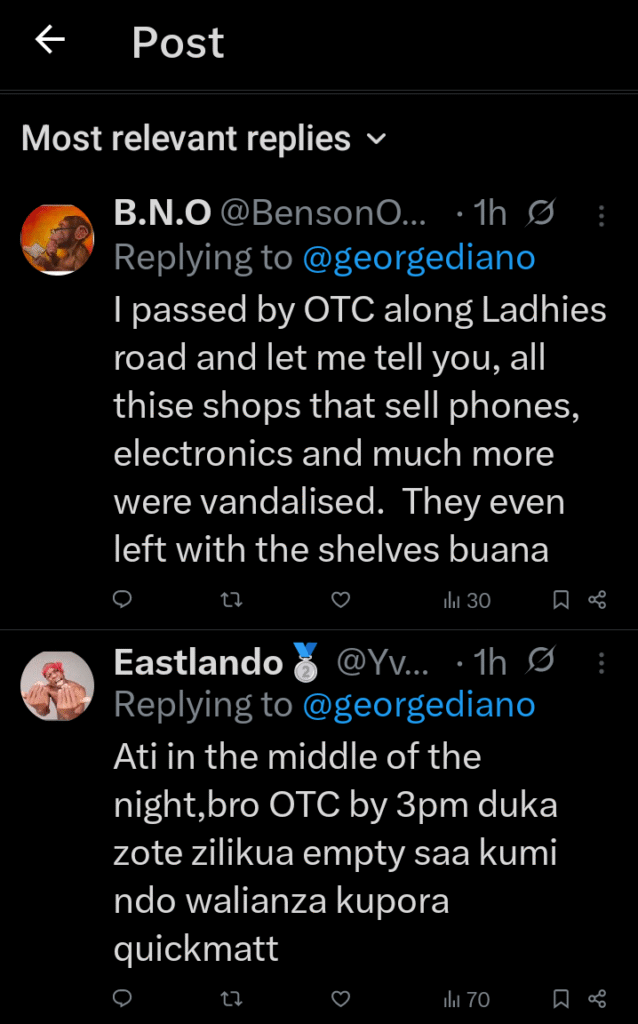
The streets of Nairobi, especially around Mfangano Street, OTC, and Moi Avenue, were littered with broken glass, burnt shops, and stolen goods. Traders are wondering why county enforcement officers and police, who are usually quick to harass small vendors, were missing in action when goons ran wild.
Even more troubling is the fact that in towns like Nyeri and Nakuru, police responded to looting with live bullets and arrests, while in Nairobi, the chaos seemed to go unchecked. This uneven response raises serious questions.
Was Nairobi abandoned to looters on purpose? Or is the leadership so weak that it couldn’t control a protest that was expected for weeks? Either way, Sakaja’s role cannot be ignored. Nairobi is the capital city, and its leadership carries a national weight.
Sakaja was elected with the promise of fixing the city, but right now, many feel he has fixed nothing and instead worsened the rot. The police have now launched investigations into the looting, but trust is already broken.
People like Kamau and Wanjiru don’t want words they want action, arrests, and compensation. They want a city that works for them, not one that’s run by thugs in the shadows.
Until there is accountability, and until Sakaja gives more than just media statements, the anger will keep growing. Nairobi deserves better than empty promises and leaders who only show up after the damage is done.














Add Comment