






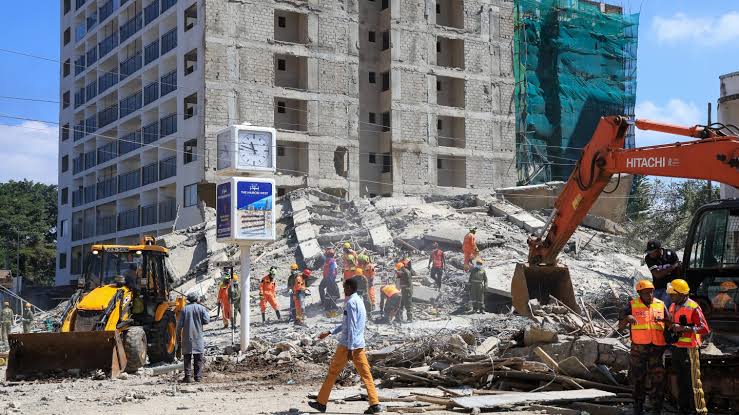

At least four people died after a 16-storey building collapsed in South C, Nairobi, in the early hours of January 1, 2026, and the tragedy immediately raised serious questions about the roles of county officials Patrick Analo and Fredrick Ochanda, as well as South C MCA Osman Khalif, in a project that residents say should never have been allowed to rise beyond its approved limits.
The building, which was still under construction along Muhoho Avenue, came down just before dawn when most of the area was quiet. Residents were woken by a deep rumbling sound, followed by a heavy cloud of dust that spread across nearby homes and roads.
Within minutes, screams and panic filled the air as people rushed toward the site to see what had happened. The structure collapsed in a pancake style, with floors falling directly onto each other, making rescue work extremely difficult from the start.
Emergency teams arrived quickly, including the Kenya Red Cross, police officers, the National Youth Service, and later the Kenya Defence Forces. Despite their fast response, the damage had already claimed lives. Two security guards who had been guarding the site overnight were among those confirmed dead. Also killed were two Bolt drivers whose vehicles were crushed while dropping off or picking up passengers in the early morning hours as per the reports shared by Robert Alai.
The exact number of passengers in the cars was not immediately clear, leaving families in painful uncertainty as rescue efforts continued.

As the search went on, anger grew among South C residents who said the collapse was not a surprise. Many pointed out that the building had been approved for only 12 floors, yet developers went on to construct 16 storeys. According to county records, several warnings and stop orders had been issued in 2025, but construction continued, often late at night.

Residents had previously complained about visible cracks and the speed of construction, saying the project looked unsafe.
Attention soon turned to the Nairobi City County planning department. Patrick Analo, the Chief Officer for Planning, was accused of allowing the extra floors to be added despite the risks. Investigations linked him to approvals that went against earlier enforcement notices. Fredrick Ochanda, the Director of Physical Planning, was also mentioned in connection with how the project continued despite clear violations.
These allegations strengthened public claims that corruption and weak enforcement played a major role in the disaster.
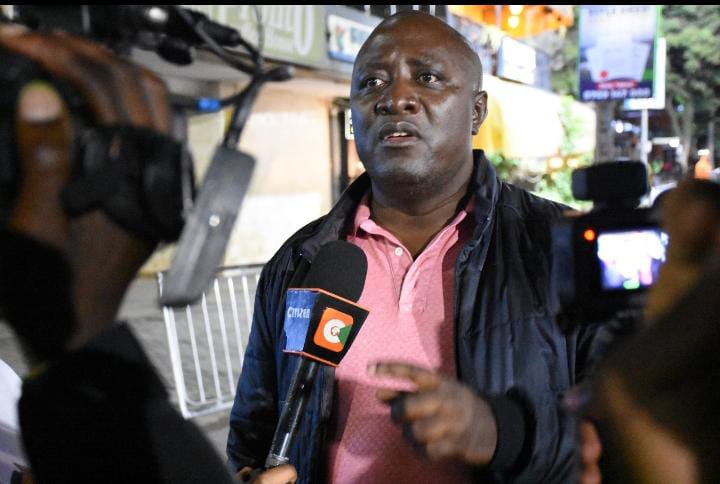
Osman Khalif, the Member of County Assembly for South C, publicly mourned the victims and called for a full investigation. He promised to push for stricter checks on construction in the area. However, some residents questioned whether local leadership had done enough earlier to stop illegal developments.
After the collapse, nearby buildings were evacuated as a precaution, and engineers were sent to assess their stability. National leaders and local MPs demanded accountability and called for the suspension of unsafe construction projects across Nairobi.














Add Comment