






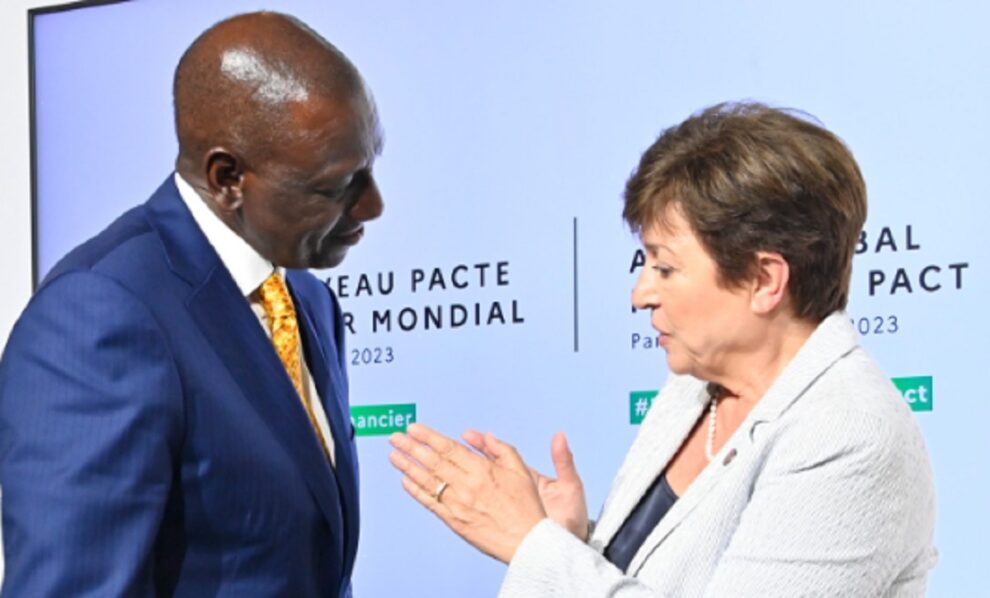

The return of the International Monetary Fund to Nairobi for another round of talks with government officials has once again placed the country at a crossroads. Many Kenyans are watching closely, not with hope but with worry, because previous engagements with the IMF have often ended with policies that deepen their financial struggles.
The mission, led by Haimanot Teferra, began discussions on September 25 and will run until October 9, with the goal of agreeing on a new loan package after the earlier US$3.6 billion programme was cut short in March.At the heart of the matter is Kenya’s debt, which has ballooned to over Ksh11 trillion.
This debt level has already stretched the economy, yet the government continues to chase new loans in order to plug budget deficits, stabilize the shilling, and keep the state machinery running.
Officials present the IMF deal as a way to safeguard the economy, but for ordinary Kenyans, each loan feels like another chain around their necks.
The conditions attached to these loans are rarely explained in detail to the public, yet their effects are visible in daily life.
When the IMF previously demanded the removal of fuel and food subsidies, the decision was hailed internationally as a reform.
Locally, however, it translated into higher bus fares, costlier maize flour, and unbearable electricity bills.
Civil servants who once relied on modest salaries now complain of shrinking payslips. A teacher earning Ksh35,000 finds their take-home reduced by deductions for PAYE, NHIF, NSSF, and new levies.
The story is the same for police officers and workers in the private sector, with companies shifting the tax burden onto employees. These are not abstract numbers on a balance sheet but lived realities that make survival harder every day.
The Kenya Kwanza government came into power on the promise of a Bottom Up Economic model. It was supposed to uplift small traders, farmers, and jobless youth through affordable credit, cheaper inputs, and opportunities at the grassroots.
A year later, that dream has been overshadowed by the weight of debt repayments and IMF demands. Mama mboga still cannot access cheap loans, farmers are still paying high fertilizer prices, and many young people remain jobless.
Instead of empowerment, Kenyans are facing deeper inequality and a growing sense of betrayal.
The government insists that these sacrifices are temporary and will eventually bear fruit. But this argument has been made before, not only in Kenya but across Africa, where IMF loans have often left countries in cycles of austerity.
Each cycle prioritizes debt repayment over the needs of citizens, forcing governments to serve creditors before the people they represent.
Even new ideas like the diaspora bond proposed by Prime Cabinet Secretary Musalia Mudavadi offer no real relief, as they only pile up more obligations for the future.
As things stand, Kenyans are bracing for more pain. Their taxes, their payslips, and their daily sacrifices are set to fund loans that may stabilize the government’s books but do little to change their lives.
The irony is striking: promises of Bottom Up prosperity have given way to top-down instructions from Washington, leaving hustlers exactly where they started—at the bottom, waiting for a change that may never come.














Add Comment