








DCI boss Mohamed Amin has once again been caught misleading the public, this time in the disappearance of blogger and IT expert Ndiangui Kinyagia. Just like in the case of Albert Ojwang, a teacher and blogger who died in police custody under suspicious circumstances, Amin has taken the same dishonest path of denial and cover-up.
His latest statement that Kinyagia is not in police custody, while at the same time asking him to surrender, is not just a contradiction it is a lie told in broad daylight.
The facts speak for themselves. Witnesses saw armed men, suspected to be police officers, abduct Kinyagia from his home in Kinoo on June 21, 2025. Almost the same style of operation that was used on Albert Ojwang is now being repeated.
In both cases, individuals critical of the government vanished, only for police to later deny involvement. Amin’s office even went further by ransacking Kinyagia’s apartment and confiscating his electronics.
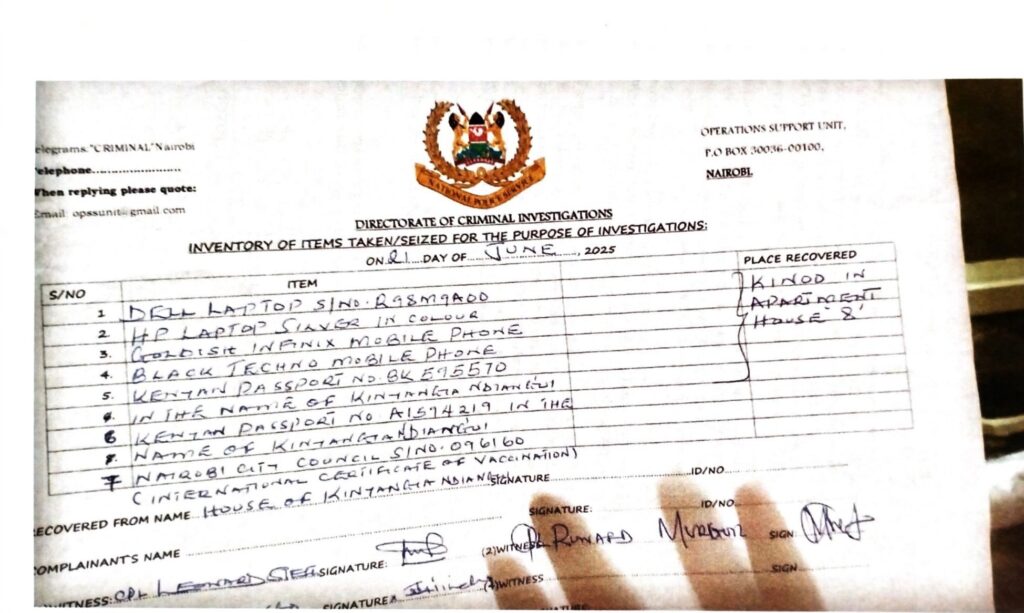
How can the DCI conduct a search on someone they claim not to be holding? This double-speak has become the hallmark of Amin’s leadership deliberate confusion, blatant lying, and total disregard for the law.
The High Court has already ordered Amin and Inspector General Douglas Kanja to produce Kinyagia or give a valid explanation. Instead of respecting the judiciary, Amin chose to issue a misleading press statement on June 30, pretending to have no idea where the blogger is, while already treating him as a person of interest in ongoing investigations.
The Law Society of Kenya has been forced to file a habeas corpus application to demand the activist be brought to court dead or alive, something that should not be necessary in a lawful country if Amin and his office were acting with integrity.
Mohamed Amin’s lies are now becoming too many to ignore. When Albert Ojwang died under police watch, Amin stood at the Senate floor giving false testimonies.
The same script is now being used in Kinyagia’s case. He is hoping that time and confusion will cover the truth, but the facts keep pointing back at him. Public records, court orders, and even documents sent to Kinyagia’s family clearly show DCI involvement.
Instead of telling the truth, Amin is mocking both the courts and the families affected, playing games with lives and hiding behind press briefings and legal loopholes.
Amin’s handling of both cases reveals a dangerous trend in Kenya’s security agencies enforced disappearances followed by lies, denials, and delays.
His role in these tragedies cannot be dismissed as mere miscommunication. It’s part of a bigger pattern of abuse of power, intimidation, and lack of accountability.
Kenyans must ask themselves why Amin remains in office despite such serious allegations of dishonesty and cover-ups in cases involving the death and disappearance of innocent citizens.












Add Comment