






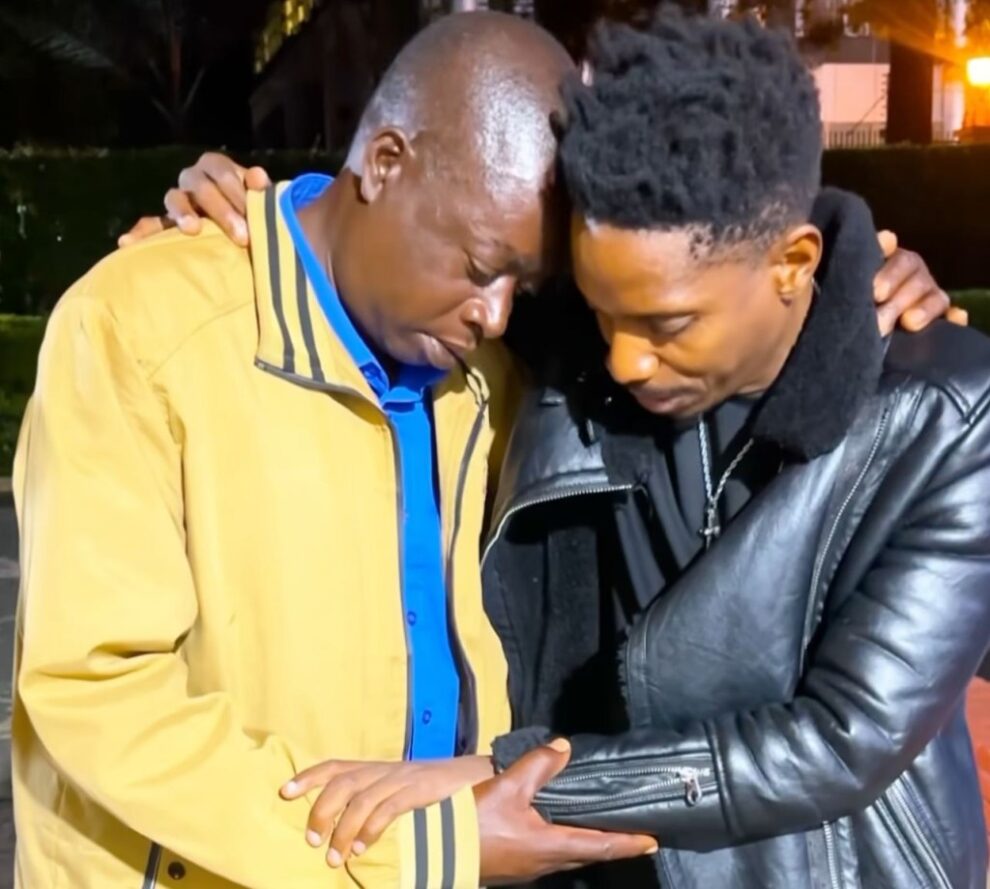

It is now becoming clear that Eric Omondi took advantage of a tragic situation to push his own interests during the fundraising for the late Albert Ojwang. Instead of working with the family and respecting structures already in place, Omondi created his own paybill number, ignoring one that had already been set up and controlled by the family. This move caused serious confusion among Kenyans who genuinely wanted to support the grieving family.
Many people did not know which paybill number to use, and questions about transparency quickly followed.
Eric Omondi shared personal M-Pesa numbers at first, but when those reached their limits, he launched a new paybill 247247 under his own control. But this wasn’t the only active fundraiser. Human rights activist Hanifa Farsafi had already started a paybill 4699944 with the full knowledge of the family.
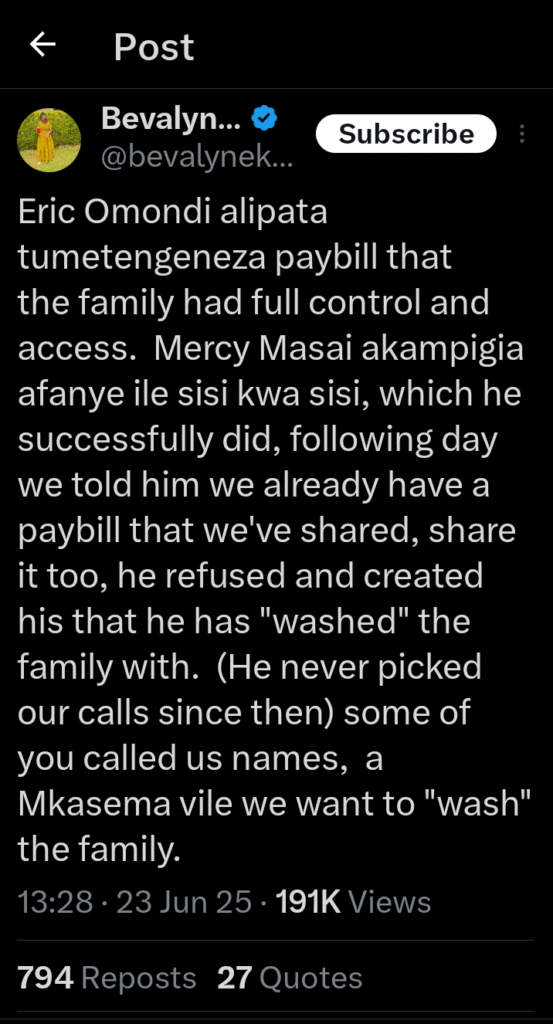
Instead of supporting that effort, Omondi went solo, raising suspicions. When Bevalyne Kwamboka, a known online voice, spoke out, she revealed that the family had created a paybill they could access directly.
She accused Eric of ignoring it, refusing to share it, and instead creating his own, then “washing” the family. In this case, “washing” clearly meant misusing or taking advantage of the family’s situation for his own gain.
These accusations were not taken lightly. Kenyans online began to ask serious questions. Some wondered whether Omondi had selfish intentions. Others, perhaps blinded by his previous acts of charity, defended him.
But the fact remains when someone acts alone in a public fundraiser, bypassing the family and others already involved, it raises red flags. Omondi failed to respect the unity and transparency needed in such a sensitive matter.
Ojwang’s father later came out to calm the public, assuring that all the paybills would be merged to ensure the funds reached the family. But that statement only proved that there had been multiple fundraisers, which should never have been the case.
This incident shows that Omondi may have used the attention surrounding Ojwang’s death to boost his own public image rather than focusing on the family’s needs.
Even worse, Omondi was unreachable after the new paybill was set up. According to Kwamboka, he ignored their calls and refused to cooperate, acting like he was the only person capable of helping.
Such behavior is not only disrespectful but damaging. Fundraising during grief should be about trust, transparency, and respect.

By acting independently, Omondi created unnecessary tension and took away focus from the real issue seeking justice for Ojwang and supporting his family.
Saboti MP Caleb Amisi also criticized Omondi for displaying victims’ numbers online, calling it unsafe in a country where state violence is real. That alone shows how reckless Eric’s approach was.
Instead of protecting the family, he exposed them to more risk and confusion.
Eric Omondi should be held accountable for his role in this mess. His decision to ignore the family’s wishes, create a separate fundraiser, and sideline those who were already helping cannot be brushed aside.
Whether or not he profited from the donations is a separate question. What’s clear is that he created division where there should have been unity. People trusted him with money meant for a grieving family.
He owed them transparency and cooperation, not ego and secrecy.
This incident is a lesson to all Kenyans. Charity is not about fame or control. It’s about working together to help those in need, not hijacking situations for personal glory.














Add Comment