




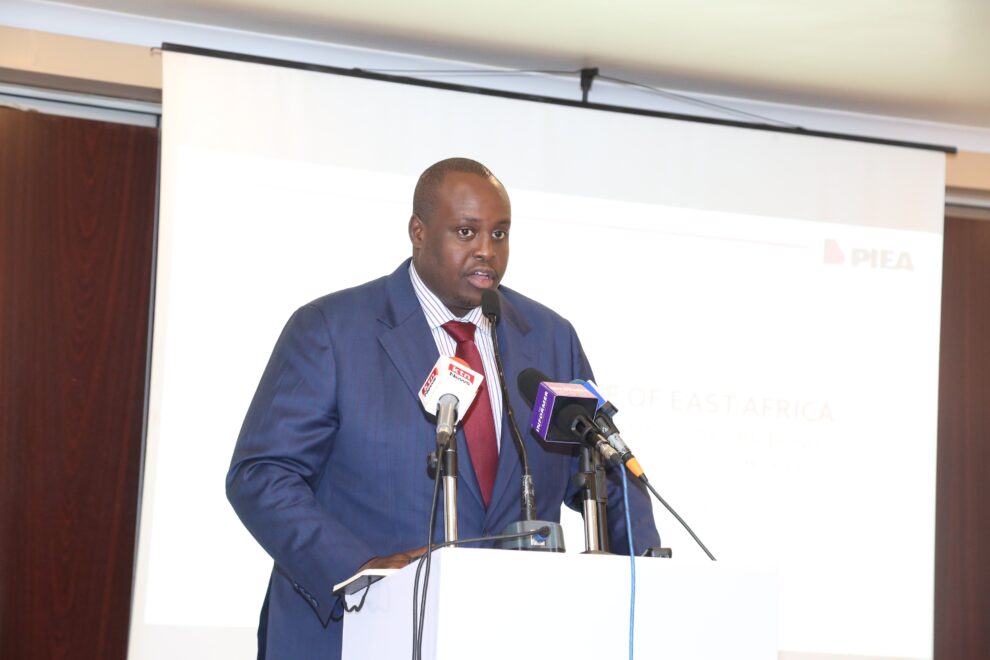

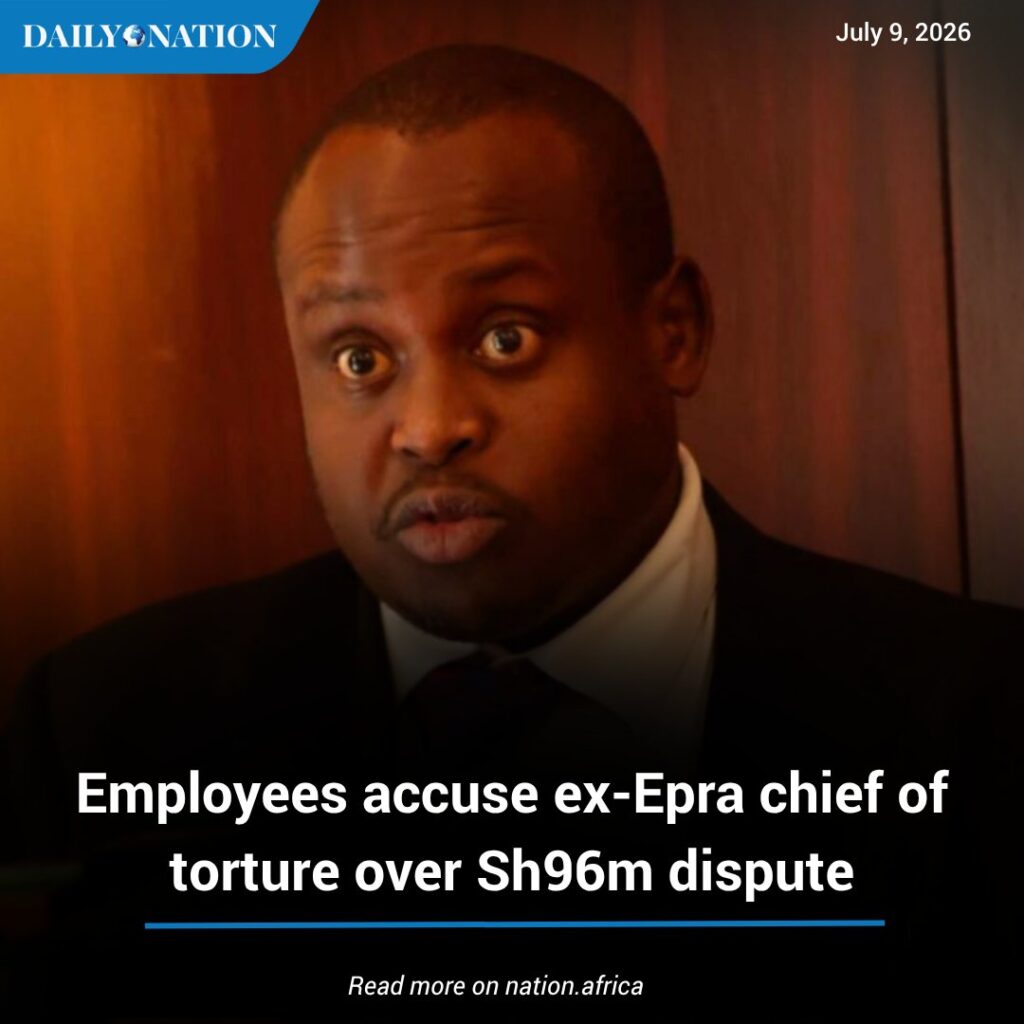
For nearly six years, Daniel Kiptoo Bargoria was one of the most powerful people in Kenya’s energy sector.
As the Director-General of the Energy and Petroleum Regulatory Authority (EPRA), he was the man in charge of ensuring that the country’s fuel was safe, that companies followed the rules, and that consumers were protected.
He helped write the very laws that governed his work. But today, a very different picture of his career has emerged, one that is not about regulation but about self-dealing, alleged violence, and an elaborate system designed to keep accountability at bay.
A series of court filings, audit reports, and police records suggest a man who used his knowledge of the system to protect himself and his business interests, even when those interests seemed to involve beating and extorting his own employees.
The most disturbing allegations against Kiptoo surfaced in late June of this year. Four employees of Tarita Group Ltd, a company he is linked to, gathered at the company’s offices on the fifth floor of the Tarita Centre in Eldoret.
They were there for what they thought was a routine meeting to go over the company’s accounts. But the meeting quickly turned into a nightmare.
According to police records and medical reports, the employees were locked in the room and confronted about a shortfall of Sh96 million in the company’s books.
Shortly after, four masked men entered the room and began beating each of the men.
They were stripped of their clothes and told that they would not leave until they gave up their land, their plots, and their commercial properties to cover the missing money.
One of the victims, who has asked to remain anonymous for his safety, said he was forced to sign over his property while a sock was stuffed in his mouth to muffle his screams. He and the others were held for more than twelve hours.
The ordeal only came to an end when one of the men’s wives managed to slip a message to a lawyer, who then alerted the police.
Officers arrived and arrested six people, but the victims say the threats have not stopped. They have been warned that going to the media would be a death sentence.
What makes this case so shocking is not just the violence, but the man who allegedly orchestrated it.
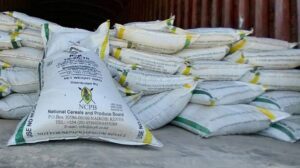
Kiptoo is not an ordinary businessman. He was the country’s top energy regulator. His name is already tied to another massive scandal involving the importation of Sh4.8 billion worth of substandard fuel.
That scandal led to his resignation in April of this year. Investigators allege that Kiptoo and other officials manufactured a false fuel shortage to justify an emergency shipment that was bought at inflated prices.
During raids on the homes of the officials involved, detectives reportedly recovered about Sh500 million in cash.
Yet, despite the severity of the allegations and the public outcry, no one has been formally charged in connection with that scandal.
Kiptoo walked away from the EPRA office and, within weeks, was back in the headlines for the alleged torture at Tarita Centre.
The story does not end with the fuel scandal or the torture allegations. It goes back much further, to the very beginning of Kiptoo’s rise to power.
An audit report from the Auditor-General’s office found that Kiptoo was present in the board meeting that recommended him for the position of acting Director-General. He did not declare a conflict of interest, even though he was a candidate for the job.
The same audit showed that the board gave him an appointment letter before the Ministry of Energy had even approved the move, and that he did not meet the senior-level management experience required by law.
He essentially helped write the rules and then bent them to get the top job. This was not a simple mistake. It was the first example of a pattern that would repeat itself again and again: using official processes and paperwork to create an appearance of legitimacy for decisions that had already been made behind closed doors.
This pattern becomes even clearer when you look at how Kiptoo has structured his business affairs.
Tarita Group Ltd, the company at the center of the torture allegations, is a shell. It is not owned by any person in Kenya.
It is wholly owned by a company registered in Mauritius, an offshore tax haven. The only director listed in Kenya holds no shares at all. This is not a coincidence. It is a method.
By hiding behind an offshore company, it becomes almost impossible for investigators or victims to determine who is truly in control. This same tactic appears in Kiptoo’s personal life, particularly in a bitter succession battle with his own half-siblings.
His father, a former managing director of the National Irrigation Board, died without a will, leaving a massive estate.
Kiptoo’s half-sister, Loise Jerop Bargoria, went to court to stop him from developing a portion of the family land.
She presented evidence showing that the same postal address used for the family home was also being used for Tarita Group’s Mauritius filings.
She argued that Kiptoo was using the offshore company to cut her and other beneficiaries out of their inheritance.
In another case, a half-brother has accused Kiptoo of forging their father’s signature to give himself hundreds of shares in a family company.
Both cases are still pending in court.
Looking at all of this together, a clear method emerges. First, Kiptoo engineers a process that looks legitimate on paper, whether it is a board vote, a company reconciliation meeting, or a government procurement.
Second, when the paper trail is not enough, he uses structures like offshore companies and nominee directors to put distance between himself and the outcome he wants.
This creates a buffer that makes it hard to hold him accountable. Third, and this is the most frightening part, when the structures are not enough, he escalates to direct force.
That is what allegedly happened on the fifth floor of the Tarita Centre.
The victims are left trying to explain their bank balances and land titles to the police, while the man they accuse of ordering their torture has yet to spend a single night in custody.
The fuel scandal remains unresolved months after millions in cash were recovered. The court cases with his siblings grind on without a clear end in sight.
Meanwhile, the police commander in charge of the torture case has admitted there is pressure to settle the matter out of court.
The silence from the Office of the Director of Public Prosecutions is deafening. For now, all these questions remain unanswered.
But the evidence suggests a man who learned that process can be captured, and once you learn that at a national level, it does not stay contained to government.









Add Comment