






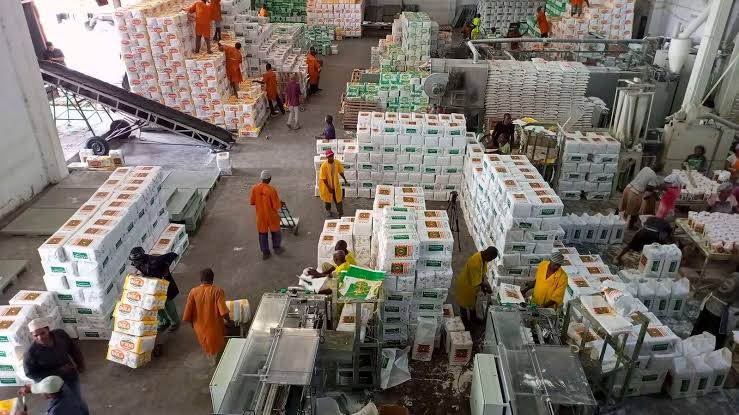

Workers at a well-known flour manufacturing company in Nairobi say they are living with daily fear and uncertainty as years of service have failed to translate into stable employment.
What was meant to be short-term work has turned into long-term insecurity, leaving many employees feeling used, ignored, and trapped in a system they do not know how to escape.
Kitui Flour Mills Limited, the company behind the popular Unga wa Dola brand, is now facing serious questions from its own workforce.
Several employees who spoke on condition of anonymity say they signed six-month contracts more than three years ago. Those contracts were never renewed in writing, yet they continue to work under casual terms.
According to Kenyan labour laws, workers who serve continuously beyond such periods should be confirmed as permanent employees.
That has not happened, and the workers say management has shown no interest in correcting the situation.
The concerns were shared with Cyprian Is Nyakundi, who was contacted directly by one of the affected workers. In a message sent to him, the employee pleaded for protection, saying, “Hello Nyakundi. Please hide my identity. There is this one company by the name Dola Group, with its headquarters along Lumumba Road. They are badly misusing workers. We signed six-month contracts more than three years ago, and they have never renewed the paperwork. We are still working as casuals but according to labour laws, after a six-month contract you should be employed permanently.”
Workers say this arrangement has created an environment of fear. Wages are said to be inconsistent, with employees unsure when or how much they will be paid. They also claim management frequently uses threats of dismissal or sudden transfers to related companies to silence complaints.
Such transfers, according to the workers, are a way of avoiding responsibility when disputes arise.
The same source told Nyakundi that this situation makes it almost impossible for employees to report abuses.
“This makes it very hard for workers to report the company, even after unlawful dismissal,” the message reads.
The worker also raised concerns about forced transfers, saying they believe this is meant to avoid liability when things go wrong.Beyond job security, employees also describe what they see as unfair treatment inside the company.
Claims of discrimination were raised, with allegations that non-Muslim workers are treated differently when it comes to tips and other benefits.
These claims have added to the feeling among staff that the workplace lacks fairness and transparency.
Perhaps most troubling is the situation of older workers. Employees say it is common to find men in their seventies and eighties still working under casual terms, despite having given most of their lives to the company.
“One of the richest empires, yet you will find old poor men, more than 80 years old, working there while still in absurd poverty,” the message sent to Nyakundi states.
The workers are now calling for attention and accountability. They want labour authorities to look into the matter and ensure the law is followed. For them, this is not about politics or publicity, but about dignity, fairness, and the right to secure employment after years of service. They hope that by speaking out, their situation will finally be taken seriously.














Add Comment