






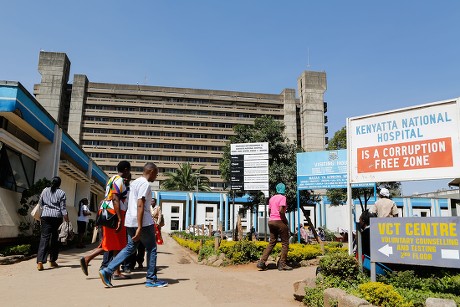

Nearly ten years after a shocking death inside Kenya’s largest public hospital, a Nairobi court has brought the case to a close by clearing four Kenyatta National Hospital employees who had been accused of murder.
The decision ends a long legal process that began after cancer patient Cosmas Mutunga was found dead while admitted for treatment, but it also leaves many difficult questions unanswered for his family and the public.
Cosmas Mutunga, who was 42 years old, had been admitted to Kenyatta National Hospital in early November 2015 to receive cancer care.
A few weeks later, on November 29, he was discovered dead inside the hospital. The nature of his injuries showed that he had been attacked, and the discovery caused public outrage.
Many Kenyans struggled to understand how such a crime could happen in a place meant to heal and protect patients.
Investigations at the time focused on hospital workers who had access to the ward where Mutunga was staying.
Four staff members, three nurses and one support worker, were arrested and later charged with murder. They were released on bail in 2016 as the case moved slowly through the court system.
From the beginning, the case attracted national attention because it involved trust in public hospitals and the safety of vulnerable patients.
On Friday, December 19, the High Court at Milimani Law Courts delivered its final ruling. The judge acquitted all four accused persons after finding that the prosecution had failed to prove its case beyond reasonable doubt.
In the judgment, the court explained that there was no direct or strong circumstantial evidence linking the accused staff members to the injuries that led to Mutunga’s death.
The judge also stated that there was no proof that the accused acted with malice or an intention to kill.
A key issue raised by the court was the environment within the hospital itself.
According to the ruling, the prosecution did not rule out the possibility that another person, not among the accused, could have committed the crime. Hospitals, especially large referral facilities, are busy places where patients, staff, visitors, and other service providers move in and out.
The court noted that access to the ward was not limited only to the accused staff, which weakened the case against them.
The trial took nearly a decade to conclude, with many delays along the way. Some of these delays were caused by procedural issues, including mental assessments to determine whether the accused were fit to stand trial.
Witness availability and repeated adjournments also slowed the process. Legal experts have often warned that such long delays can harm the quality of evidence and reduce public confidence in the justice system.
During the early stages of the case, the Kenya National Union of Nurses strongly criticized the arrests.
Union leaders argued that investigators had rushed to blame frontline health workers instead of addressing wider security failures at the hospital.
They said the nurses were being treated as scapegoats for problems that went beyond individual staff members. On several occasions, fellow nurses gathered at court to show support for the accused.
While the acquittal brings relief to the four former suspects and their families, it does not provide closure for the Mutunga family.
The question of who killed Cosmas Mutunga remains unanswered. The case has also renewed calls for better security measures in public hospitals, including controlled access, improved surveillance, and clearer accountability systems.














Add Comment