







Kenya’s public health system is facing renewed scrutiny after the government announced tough steps aimed at dealing with doctor absenteeism and suspected abuse of public office.
The move comes as concerns continue to grow about doctors who are officially employed in government hospitals but spend working hours treating patients in private facilities for extra pay.
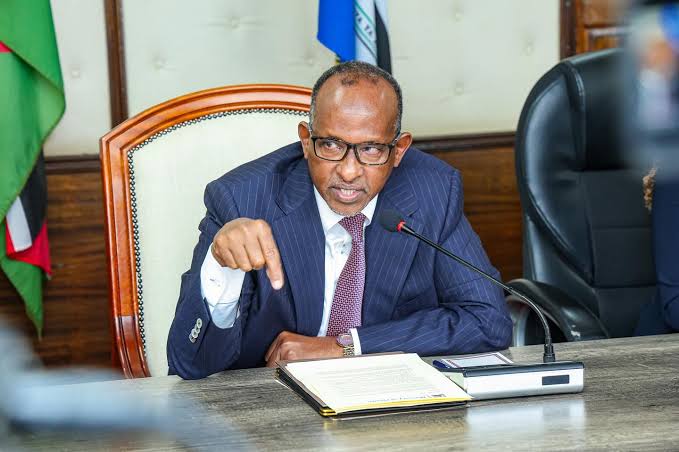
The Health Cabinet Secretary, Aden Duale, has directed the Social Health Authority to begin rejecting insurance reimbursement claims linked to such practices.
Starting January, the SHA digital claims system will be used to identify and block claims submitted by doctors who are registered as public hospital staff but are found to have treated patients in private hospitals during official government working hours.
According to the CS, this will apply where records show a doctor was meant to be on duty in a public facility at the same time they were billing for services elsewhere.
The directive was announced on December 16 during a visit to Tharaka Nithi County. Duale said the practice had become widespread and was harming public hospitals. He explained that some doctors working in government facilities were deliberately referring patients to private clinics they own or work in, instead of treating them in public hospitals.
This, he said, denies public facilities both patients and revenue, even as the same doctors continue to earn full government salaries.
Duale described the situation as fraudulent, especially when doctors take locum work between 8 am and 5 pm, which are official working hours in public hospitals.
He cited Kenyatta National Hospital as an example, noting that the facility has 26 fully equipped operating theatres staffed by qualified specialists, yet patients are often given surgery dates months away.
In some cases, patients are later contacted by brokers who offer faster procedures in private hospitals, allegedly carried out by the same doctors who work at KNH.
To strengthen enforcement, Duale instructed the Digital Health Authority to work closely with the Social Health Authority to ensure the new controls are effective. He also warned private hospitals that knowingly submit fraudulent claims that such facilities will face sanctions.
The warning was supported by Tharaka Nithi Governor Muthomi Njuki, who chairs the Council of Governors’ health committee.
Njuki accused some doctors of using public hospitals to build their reputation and patient base, only to divert patients to private practice for personal gain.
He added that some county hospitals are actually better equipped than the private facilities patients are being referred to.
However, the doctors’ union, the Kenya Medical Practitioners, Pharmacists and Dentists Union, strongly opposed the policy.
The union argued that the plan is unrealistic and could worsen service delivery if implemented without consultation. KMPDU said public hospitals in Kenya suffer from severe staff shortages, forcing doctors to work long hours, handle emergencies, and remain on call beyond standard office times.
This, they said, makes it difficult to clearly separate on-duty and off-duty hours.
The union objected to the use of fixed clock-time, such as 8 am to 5 pm, as the basis for automatically rejecting insurance claims. It warned that such controls do not reflect the real working conditions in public hospitals and could lead to unfair punishment.
KMPDU also criticised the government for failing to consult health workers and other key stakeholders before announcing the policy.
Absenteeism among doctors has long been a serious concern in Kenya. World Bank studies, including the 2018 Service Delivery Indicators report, found that more than half of health workers were absent during unannounced visits, with doctors recording absenteeism rates of over 60 per cent.
Further reports warned that public money spent on salaries does not always result in services for patients, mainly due to weak enforcement and lack of accountability.
The World Health Organization has also highlighted absenteeism as a governance problem, pointing to poor monitoring systems and weak sanctions.














Add Comment