








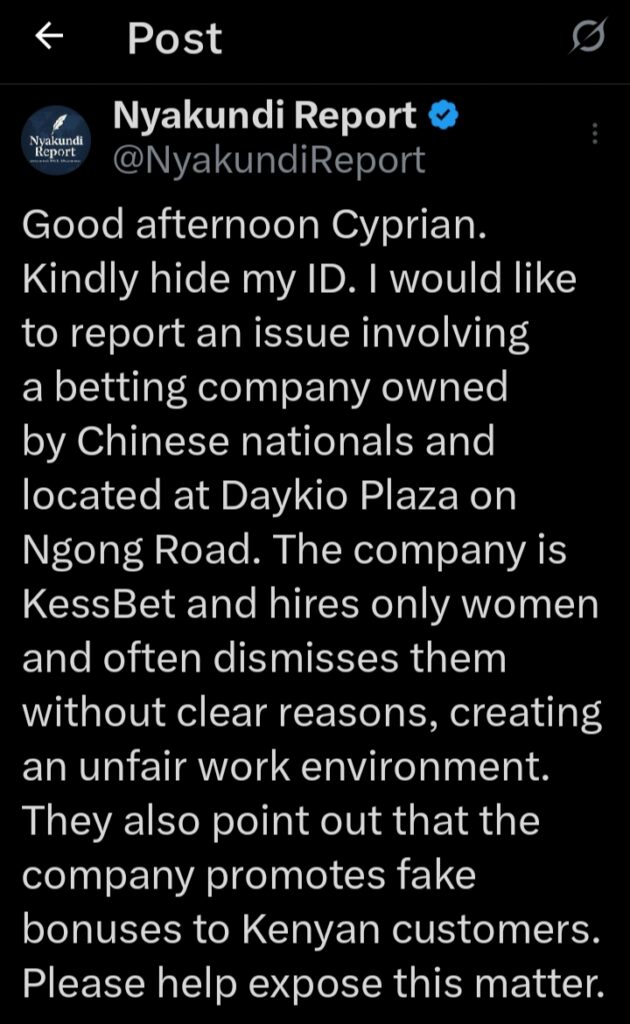
Concerns are growing around the operations of KessBet after an anonymous individual came forward with troubling details about how the company treats both its employees and customers.
According to the whistleblower, who shared the information with popular blogger Cyprian Nyakundi, the betting firm has been running in a way that raises questions about fairness, honesty, and respect for Kenyans.
The company is based at Daykio Plaza along Ngong Road in Nairobi, and although it is still new in the market, it has already drawn attention for the wrong reasons.
The whistleblower says KessBet is owned by Chinese investors and tends to hire mostly young Kenyan women for customer service roles. These employees reportedly face sudden dismissals without warning or explanation. Many come to work every day unsure whether they will still have a job the next morning, creating an environment filled with fear and uncertainty.
For people trying to build their careers and support their families, such conditions can be extremely stressful and demoralising.
Employment in Kenya is protected by clear labour laws that require fair procedures before termination, and if these claims are true, the company could be violating these rules.
The same informant raises another serious issue affecting customers. KessBet is accused of using fake bonuses and misleading promotions to attract new players.
The betting platform advertises free bets, cashback rewards, and deposit bonuses, but many customers allegedly find it impossible to access these offers once they join. Some report that the money does not reflect in their accounts, while others discover hidden conditions that block them from making withdrawals.
Such tricks leave customers feeling cheated after losing money they hoped to multiply. Betting already involves risk, and when companies use dishonest methods to lure players, it becomes harmful to ordinary Kenyans.
KessBet started its operations in mid 2024 under a Kenyan-registered firm known as Kessun Kenya Limited. It is licensed by the Betting Control and Licensing Board, offering sports betting, casino games, virtual sports, and live betting.
The platform appears modern, with many markets including local and international football matches. It also accepts M-Pesa deposits and withdrawals, making it convenient for users across the country.
Despite all this, customers have already posted mixed reviews on social media.
Some users say they have problems accessing their accounts or believe the company mishandles their personal details. Others complain about receiving marketing messages or calls even though they never registered, raising questions about how their phone numbers were obtained. Delays in paying out winnings and inconsistencies in promotions are also among the issues mentioned.
These concerns align closely with what the whistleblower has described, adding weight to the allegations.
The issue of hiring practices is particularly disturbing. In several online betting companies, there is a trend of employing young women for customer-facing roles, sometimes based on appearance rather than qualifications. This can create a toxic work culture where employees feel replaceable and undervalued.
If dismissals happen without proper cause or notice, workers could file claims for unfair termination. Kenya’s labour laws are clear about notice periods, disciplinary procedures, and the right to be heard before being fired.
Foreign investment in Kenya’s betting industry can support economic growth, but it must come with respect for local laws, workers, and customers. If a company advertises bonuses that do not exist or fires employees without following due process, it shows disregard for the people it relies on.
Authorities like the Betting Control and Licensing Board and labour offices should investigate these claims to protect both bettors and workers.
The information shared by the anonymous whistleblower highlights issues that many Kenyans may experience silently.













Add Comment