






Life in Mandera County has never been simple, and once again residents find themselves caught between disputes that begin across the border but quickly reach their doorsteps.
The county, sitting on Kenya’s northeastern edge, shares a long and porous frontier with Somalia, and what happens in Somalia often has a direct effect on people in Mandera.
The most recent unrest came after heavy fighting in Beled Hawo, a Somali town lying just across the boundary, where Somali federal troops clashed with Jubaland forces.
The battles left casualties and displaced families, with the ripple effects spreading into Kenya.
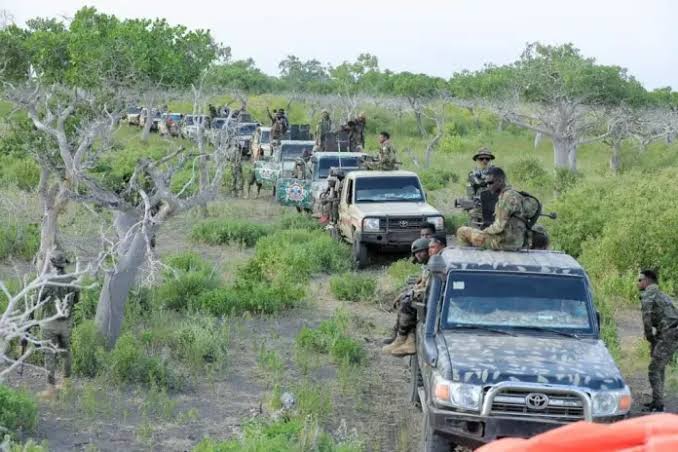
Reports say some Jubaland soldiers who were overpowered in the fighting crossed into Mandera and camped in Border Point One village, an action that has stirred serious debate about sovereignty and the safety of citizens.
Governor Mohamed Adan Khalif openly warned that the presence of foreign fighters in Mandera could endanger local communities. He raised particular concern over activities near BP One Primary School, a site that has been frequently mentioned in past security discussions.
His fears were not unfounded, since similar incidents occurred in 2020 when Jubaland troops were seen moving freely inside Mandera town.
These repeated patterns show how the county has become a frontline for disputes that originate in Somalia but do not respect borders.
Kenya has a long history with Jubaland. Since 2011, when Operation Linda Nchi was launched to push back Al-Shabaab attacks, Kenya has supported the semi-autonomous Somali state centered in Kismayo.
Kenyan forces played a key role in helping Jubaland take shape, hoping to create a buffer zone against militants. Allegations now suggest that the Kenya Defence Forces have continued to provide training for Jubaland fighters inside Mandera before they head back across the border, something Nairobi has officially denied.
Still, these claims echo past accusations of Kenya being indirectly involved in Somalia’s internal rivalries.
The matter has also entered Kenya’s political space. Former Deputy President Rigathi Gachagua remarked that large parts of Mandera seemed to be under the influence of external actors, echoing the governor’s concerns.
His comments came alongside his wider criticism of the current administration, which he accused of having questionable ties in the region.
For some observers, however, such heated statements may be serving another purpose diverting attention from troubles at home, especially the growing scandal in the health sector.
The Social Health Authority, introduced to replace the old National Hospital Insurance Fund, was meant to deliver universal health care. Instead, it has been rocked by allegations of massive corruption, including billions paid to ghost hospitals and closed facilities. Investigations have pointed to over ten billion shillings lost through fraudulent claims and poor procurement practices, prompting calls for senior officials to step aside. President William Ruto has promised prosecutions and refunds, but anger has grown as more evidence of mismanagement comes out. Civil society groups now argue that the government may be using the heightened border debate to shift focus away from this scandal.
Meanwhile, residents of Mandera remain at the center of it all. Community leaders are urging stronger border patrols and open dialogue between Kenya and Somalia to prevent further escalation. Non-governmental organizations have already stepped in to support displaced families seeking shelter in schools.
Jubaland leaders continue to deny that their forces entered Kenya, while Mogadishu accuses Nairobi of meddling in its internal affairs. Without clear evidence, the truth remains contested, but what is certain is that ordinary people living along the border face the greatest risk.
For them, each flare-up across the frontier brings fear of stray bullets, displacement, and disrupted lives.The recurring tensions show how fragile peace is in the Horn of Africa, where local conflicts quickly entangle regional politics.










Add Comment