






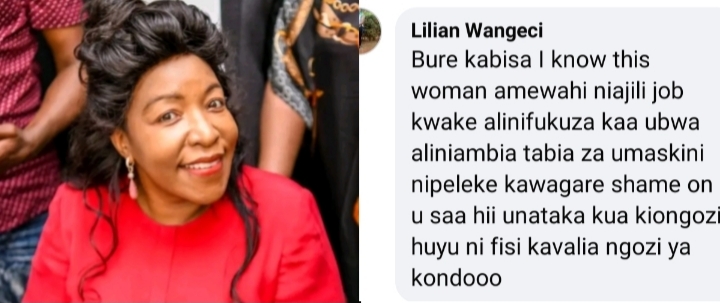

Agnes Kagure has recently found herself at the center of an uncomfortable online exchange that has raised questions about image, leadership, and personal experiences shared by ordinary people.
Kagure, a businesswoman and leader of the Kenya Patriots Party, has been actively positioning herself for a possible run for governor of Nairobi County in the 2027 elections.
As part of building her political presence, she often shares motivational messages aimed at people working hard to improve their lives in the city.
One of those messages recently attracted attention online. In a Facebook post meant to inspire workers and entrepreneurs, Kagure wrote: “To everyone striving, working hard, and chasing their dreams, let nothing stop you, not even the county leadership’s incompetence. Go forth, and let’s make this week fruitful!”
The message appeared to speak to the frustrations many Nairobi residents face with county services and leadership challenges. It also reinforced Kagure’s public image as someone who supports hardworking people and understands the struggles of ordinary citizens.
However, the conversation quickly shifted after a sharp response from a woman identified as Lilian Wangeci.
Her comment directly challenged the image Kagure was projecting in her message. Instead of reacting to the motivation in the post, Wangeci shared what she claimed was a personal experience with Kagure.In her words, Wangeci wrote: “Bure kabisa I know this woman amewahi niajili job kwake alinifukuza kaa ubwa alinambia tabia za umaskini nipeleke kawagare shame on u saa hii unataka kua kiongozi huyu ni fisi kavalia ngozi ya kondooo.”
The comment carried anger and frustration. Wangeci claimed that she once worked for Kagure but was later fired in a humiliating manner.
According to her statement, she felt she was treated harshly and insulted. The words she used painted a picture that sharply contradicts the public image Kagure often presents as a mentor and supporter of people trying to build better lives.
The phrase “fisi kavalia ngozi ya kondooo” is widely understood in Kenyan conversations as an accusation of hypocrisy. It suggests someone who presents themselves as kind and trustworthy in public while hiding a different character in private.
Wangeci made it clear that she believes Kagure’s public message does not match the experience she claims to have had.
The exchange quickly drew attention because Kagure is not an ordinary social media user. She is a political figure trying to convince Nairobi residents that she deserves their trust and support.
When someone seeking leadership posts motivational messages about hard work and opportunity, people naturally begin to compare those words with real life experiences.
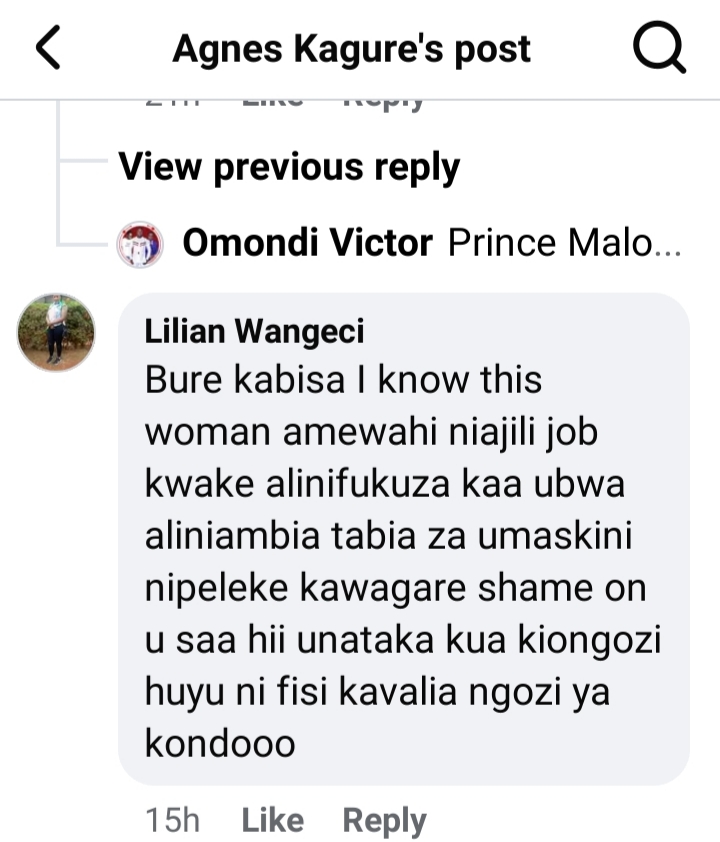
This is where the situation becomes uncomfortable for Kagure. Her message was meant to encourage people struggling under difficult economic and political conditions and the recent floods that reigned havock in Nairobi.
Instead, it triggered a personal accusation that questions how she treats individuals who worked under her.
Online spaces in Kenya have increasingly become places where such experiences are shared publicly. For politicians, this means the public narrative is not controlled only through speeches, press statements, or campaign promises. Ordinary people can step forward with their own stories, and those stories can quickly reshape the conversation.
For someone hoping to lead Nairobi, the challenge goes beyond inspiring words. Residents want to know whether the values spoken online reflect real behavior in everyday interactions.














Add Comment