






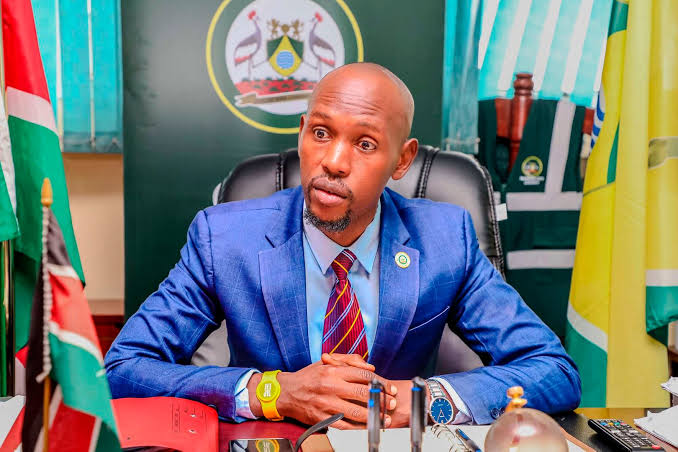

Debates about fairness and gender justice in Kenya have grown louder, and Geoffrey Mosiria has become a central figure in these discussions because of how he reacts to public scandals.
As Nairobi County Chief Officer for Citizen Engagement and Customer Service, Mosiria has used his voice and position to comment on sensitive cases, raising questions about whether his approach is balanced or selective.
In recent weeks, Kenyans have watched two very different cases unfold, both involving serious accusations but receiving unequal public attention.
Many people have pointed to Mosiria’s actions as a clear example of this imbalance. Supporters say he is standing up for victims, while critics argue that he speaks loudly in some cases and stays quiet in others until pressure builds.
One case involved James Opande, a Kenyan medic based in the United States, who was accused of recording and leaking a private video of Marion Naipei without her consent. The video showed Naipei in a vulnerable state at a Nairobi club and caused widespread anger across the country. Mosiria quickly stepped in, publicly defending Naipei and calling for Opande’s arrest. He met her in person, shared her story online, and pushed authorities to act fast.
His involvement helped turn the issue into a national topic, with leaders and social media users demanding strong action. Opande was later detained at Jomo Kenyatta International Airport as he tried to travel back to the US, while some leaders even called for his deportation.
At the same time, another serious incident received far less attention. A well-known Kenyan actress and comedian, Adoyo, was accused of pouring hot water on her husband during a domestic dispute.
The man suffered serious burns covering nearly half of his body. Although Adoyo was arrested, she was released on a cash bail of KSh 20,000, and the story quickly disappeared from public discussion. For several days, there was little reaction from leaders and activists who had strongly condemned Opande.
It was only after people online began pointing out this difference that Mosiria spoke up about the hot water case. He then called for Adoyo’s arrest and stressed the need for accountability.
To many critics, this late response showed a pattern of selective activism. They argue that justice should not depend on public pressure or on whether a case fits a popular narrative.
These concerns were echoed in a viral Facebook post by Jim Bonnie, which openly criticized the double standards seen in such cases.
Bonnie wrote: “There is a lady actress who doused his hubby’s body in hot water, her actions haven’t attracted criticism enough. Yet Opande James who recorded his moment with his girlfriend of many years has been the topic of the week. Toxic feminists have been having a field day scavenging on the carcasses of his reputation. Moral policemen and women and desperate content creators have milked the story dry all baying for Opande’s blood. Jealousy even creeped in with some calling for the guy to be fired from his U.S. job.
This wasn’t only championed by laymen but also leaders with Millie Manona making a stupid post calling on ICE to depot Opande, a post that went south right on her timeline. Had the lady the one who held Opande’s d!ck and filmed, the same toxic feminists and the wanaume kama mabinti counterparts would now be all over asking for video and giving opinion on the size of Opande’s tool of trade. In this country it isn’t about the offence, it’s about the gender. And you know which one suffers most. Continue dancing on your neighbour’s grave.”
Mosiria’s history as a public servant adds more weight to the debate. He has a strong online following and has previously been praised for his work in environmental cleanups in Nairobi. However, his move into public social commentary has brought mixed reactions. While he says his goal is justice, many Kenyans want consistency.












Add Comment