




Security officers in Nakuru County have once again demonstrated their growing focus on stopping the movement of illegal drugs as part of a wider national effort to protect communities.
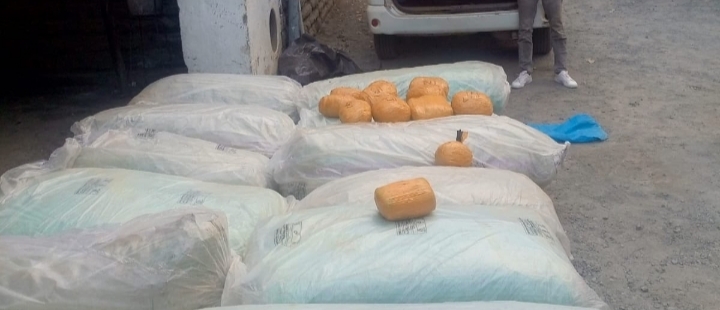
In a series of coordinated operations, detectives from the Directorate of Criminal Investigations moved in on suspected traffickers and recovered large quantities of bhang believed to be worth more than KSh 11 million.
The operations highlight how drug trafficking continues to be a serious challenge, especially along busy roads and transport routes.
One of the operations took place along the Kabarak–Nakuru road, a route often used by vehicles travelling in and out of the county.
Officers from the Anti-Narcotic Unit, working closely with the police dog unit, stopped a vehicle that had raised suspicion. While the driver managed to escape, the co-driver was arrested at the scene.
A thorough search of the vehicle led to the recovery of 12 green sacks and another 12 bales of bhang. The drugs weighed about 387 kilograms, a quantity that investigators believe was meant for distribution to different parts of the region.
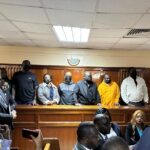
The suspect was placed in police custody as detectives prepared to take him to court, and the recovered drugs were secured as evidence.In another incident within the same county, detectives intercepted a Toyota Fielder in the Kamwosor area of Keiyo South constituency.
Acting on intelligence, officers searched the vehicle and found seven bags of suspected bhang.
The driver was arrested and taken to Metkei Police Station, where he remains as investigations continue.
Authorities estimated the combined value of the drugs seized in both operations at around KSh 11.61 million.
These arrests are part of a broader campaign to deal with drug trafficking and abuse, which has been blamed for rising crime, health problems, and social breakdown, especially among young people.
Only recently, still in Nakuru County, detectives arrested a 42-year-old suspect who was found with heroin worth about KSh 1.19 million.
The drug had been hidden in luggage being carried on a motorcycle, showing the lengths traffickers go to avoid detection.
The government has responded by strengthening its institutions and changing its approach. Early in 2026, President William Ruto announced plans to expand the Anti-Narcotics Unit within the DCI from about 200 officers to nearly 700.
The officers are set to receive advanced training similar to that of the Anti-Terrorism Police Unit, including skills in forensic analysis and financial investigations.
This move aims to ensure that officers can not only arrest suspects but also trace and dismantle the networks behind the trade.
The Ministry of Interior has also revealed that some major drug dealers are hiding behind legitimate businesses. Instead of focusing only on arrests and seizures, the ministry says it will target the financial systems that support drug trafficking.





Add Comment