






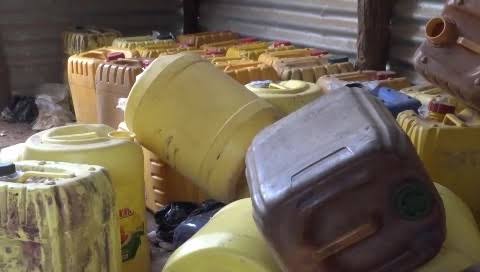

A recent multi-agency operation in Garissa has revealed how deeply illegal petrol trading has taken root in parts of the county, raising new concerns about safety, lost revenue, and unfair competition.
The operation, conducted in the Burburis area, brought together local security teams, officers from the Kenya Revenue Authority, and officials from the National Environment Management Authority.
Their focus was on unlicensed fuel operators who had quietly set up makeshift selling points and attracted customers with low prices.
These sites had been running for months without approval, creating a thriving black market for petrol.
According to officials, the illegal fuel points sold petrol far below the normal pump price because the product came from untaxed supplies.
This meant licensed petrol stations were struggling to compete, and the government was losing tax revenue. More importantly, the makeshift fuel points lacked safety standards, putting nearby residents at risk.
The teams involved in the operation dismantled several of the illegal structures and seized numerous 20-litre jerricans believed to be used for storage and distribution.
Authorities said the jerricans were part of a wider network supplying the underground trade that had been active for between three and six months.
Garissa County Commissioner Mohamed Mwabudzo, who led the operation, issued a strong warning to those involved in the illegal business. He said anyone caught selling fuel without the required licences would be taken to court and face legal consequences.
He explained that the cheap petrol was the result of evading taxes, something that harms both the economy and legitimate traders.
He emphasized that the government would continue monitoring the area to ensure the illegal trade does not resurface after the crackdown.
While authorities focused on the risks and losses caused by the illicit activities, some residents had a different view. Several locals said the high cost of living and rising fuel prices had pushed many people to seek cheaper alternatives.
One resident appealed to the government and the Kenya Revenue Authority to lower the cost of essential goods so that people in Garissa could afford to buy petrol legally.
The resident said the cheaper fuel had helped many households manage their expenses, especially at a time when prices of basic items had become hard to sustain.
The operation in Garissa is part of a broader national effort to curb illegal trading and protect consumers. In recent months, authorities across Kenya have increased inspections and enforcement efforts to deal with tax evasion and unsafe business practices.
The Garissa case shows how quickly illegal fuel networks can grow when economic pressures rise and when unregulated operators find gaps in enforcement.
Officials have indicated that more follow-up operations will be carried out to prevent the illegal fuel business from returning and to restore fair competition in the sector.










Add Comment