






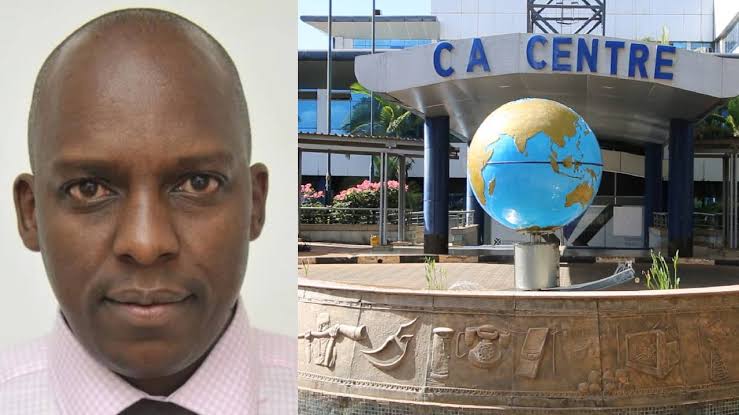

Many Kenyans continue to struggle with the rising cost of communication, and recent concerns raised in the Senate have once again brought this debate back into focus. Nandi Senator Samson Cherargei is now pressing the Senate Standing Committee on Information, Communication and Technology to give clear answers on why the Communications Authority of Kenya has failed to adopt lower Mobile Termination Rates, even after receiving expert advice that pointed to a major reduction as the best option for the country.
The Senator raised the issue on November 19, stressing that Mobile Termination Rates, commonly known as MTRs, play a big role in shaping the cost of voice calls across different networks.
He explained that when MTRs remain high, ordinary Kenyans end up paying more whenever they make calls to people on other networks.
Lowering these rates, he argued, would make communication cheaper and more accessible, especially for low-income users who depend heavily on mobile phones for daily interactions.
He reminded the Senate that MTRs are simply the charges one mobile provider pays another when a call ends on a different network, and these charges eventually influence the final cost on the consumer’s side.
Senator Cherargei pointed out that the Communications Authority had already hired an independent consultant to study the issue in depth.
After comparing Kenya’s mobile termination charges with international standards, the consultant recommended that Kenya should lower the MTR to Ksh.0.06 per minute.
This recommendation was based on trends seen in other countries where regulators have either slashed the charges drastically or removed them completely.
The goal in those countries has been to bring down the cost of calling, increase competition among mobile operators, and ensure that consumers benefit from fair pricing.Instead of applying this expert advice, the CA announced a revised rate of Ksh.0.41 per minute, which took effect on March 1, 2024.
Although this was a drop from the previous Ksh.0.58 per minute, it still remained far from the recommended Ksh.0.06. Cherargei questioned why the Authority decided to ignore the lower figure, stating that the consultant had clearly outlined the importance of adopting a rate that aligns with international best practices.
He also noted that some regions have embraced zero-rated termination charges, showing that Kenya still has a long way to go in making its telecom sector more consumer-friendly.
According to the Senator, the decision to maintain a much higher rate raises questions about the reasoning behind departing from expert advice. He insisted that Kenyans deserve to know why the Authority is holding back on a move that would directly reduce the cost of communication.
He also asked the Committee to reveal the exact timeline within which the CA plans to adjust the MTR to match the consultant’s recommendation, noting that the current rate remains in place until March 2026.
Cherargei added that transparency and accountability are necessary to ensure that the lower MTR is not delayed further and that consumers finally receive the relief they have been waiting for.












Add Comment