






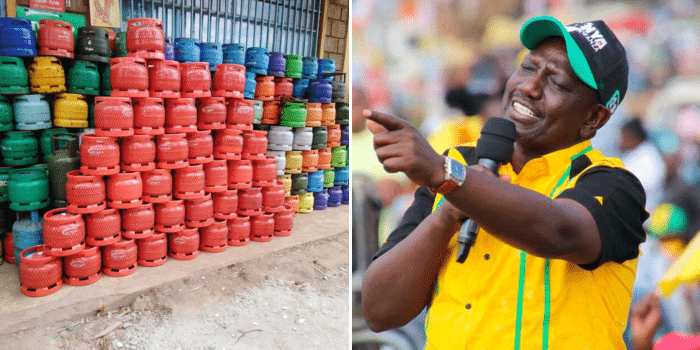

Many families who had expected to receive free gas cylinders as promised during President William Ruto’s 2022 election campaign are now finding themselves paying for them.
What was once described as a programme to support low-income households and encourage the use of clean energy has now turned into a subsidised plan.
The change has disappointed many people who had counted on the pledge, viewing it as a step backward from the President’s initial promise.
The government now says the shift is meant to make the programme more sustainable, but critics argue it is a betrayal of trust.
Energy and Petroleum Regulatory Authority (EPRA) Director General Daniel Kiptoo told the Senate Standing Committee on Energy that the free gas plan was not financially sustainable in the long run.
He explained that a subsidy would allow more households to access cooking gas at affordable prices while keeping the programme running without draining government resources.
According to him, the focus should be on safety, efficiency, and long-term affordability rather than on distributing gas for free.
Despite these explanations, the government’s U-turn has drawn public outrage. Many low-income earners who believed they would finally have access to clean energy without cost now feel abandoned.
For some, the promise of free gas was a sign of hope in reducing their dependence on charcoal and kerosene, which are both expensive and harmful to the environment.
The new arrangement, they say, adds another financial burden at a time when the cost of living remains high.
Critics have accused the administration of failing to honour a key campaign pledge, arguing that the shift raises concerns about accountability and honesty in governance.
In the midst of this controversy, the government has launched a nationwide crackdown on illegal gas dealers and counterfeit cylinders. Kiptoo revealed that enforcement teams are now working around the country to dismantle unlicensed refilling sites that pose serious safety risks. Authorities have already seized hundreds of fake cylinders and shut down several unlicensed plants. The crackdown follows concerns that counterfeit gas products are endangering lives, with past tragedies like the Embakasi explosion still fresh in people’s minds.
EPRA says the effort to clean up the market is meant to protect consumers from unsafe gas and restore confidence in the LPG sector. Kiptoo assured lawmakers that the agency has strengthened inspection standards and will continue prosecuting those involved in illegal refilling and distribution. Lawmakers, including Nairobi Senator Edwin Sifuna, have pressed EPRA to ensure that safety measures are strictly enforced, especially in schools and public institutions that use LPG.
The broader debate, however, remains unresolved. While the government defends the shift to subsidies as a practical and sustainable move, many citizens feel the decision goes against the spirit of the original campaign promise.
They argue that those who voted for change based on such commitments deserve clarity and honesty. The issue highlights the growing gap between political promises made during campaigns and the realities of policy execution once in power.In the end, the government’s decision may achieve safety and sustainability, but it has also left behind a sense of disappointment and mistrust.
For now, many families are paying for what they once believed would be free, a reminder of how easily promises can turn costly in the complex world of politics and governance.








Add Comment