






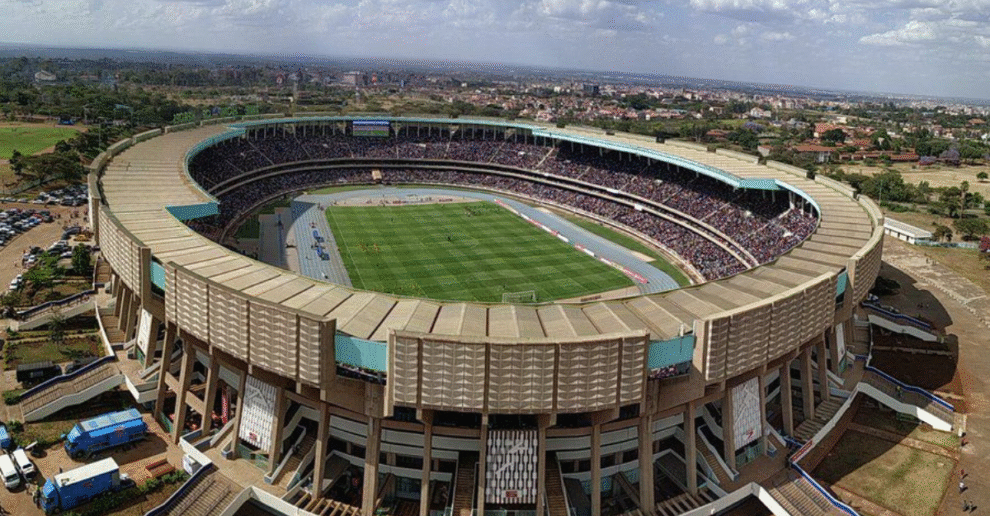

Sports management in Kenya has once again come under the spotlight after an audit exposed shocking gaps in accountability at Sports Kenya, the state agency responsible for overseeing national sporting facilities.
The findings have raised serious concerns about how billions of taxpayer funds have been spent over the years, with little to show for it.
One of the most disturbing revelations is that Sports Kenya does not even hold a title deed for the Moi International Sports Centre in Kasarani, one of the most iconic sports complexes in the country.
This disclosure was made before the National Assembly’s Public Investment Committee on Social Services, where lawmakers were left puzzled at how the country’s biggest stadium has operated for decades without official proof of ownership.
Officials from Sports Kenya admitted that they are still pursuing the documents through the National Land Commission, a process that has dragged on for years.
Members of Parliament, led by Committee Chair Caleb Amisi, demanded answers on why such a critical issue had been neglected for so long, especially when billions have been spent on maintaining and upgrading the facility.
Lawmakers warned that the lack of a title deed exposes the stadium to land disputes and possible financial losses that could cost taxpayers heavily.
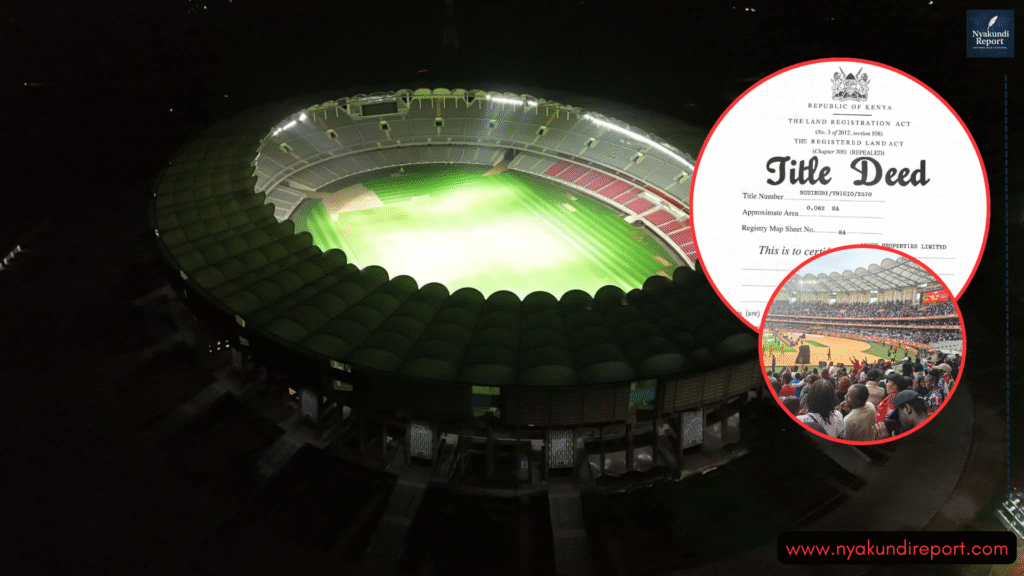
The matter has now become a symbol of the wider failures within Sports Kenya, which has for years been accused of mishandling funds allocated for infrastructure development in the sporting sector.
The audit also revealed deeper scandals beyond Kasarani. Three major stadium projects that were promised in Nairobi, Kisumu, and Eldoret never took off despite the government releasing money for preliminary work.
A staggering Ksh99.6 million was spent on feasibility studies and another Ksh57 million on architectural and project management services, even though no title deeds had been secured for the lands where the projects were supposed to be built.
To date, no construction has started, leaving Kenyans with nothing but empty promises.
These projects were tied to the Vision 2030 development blueprint and the Sports Act of 2013, which had promised to transform Kenya’s sports sector.
Funds were allocated during the 2014/2015 and 2015/2016 financial years, but nearly a decade later the stadiums remain unbuilt. For many lawmakers, this was yet another example of ghost projects that drain public funds while delivering no real benefits.
Acting Director General Gabriel Komora and other senior managers of Sports Kenya failed to provide convincing explanations when pressed by MPs.
They could not produce documentation to justify the expenditures and struggled to explain why ownership issues were ignored before funds were released.
The committee was also alarmed by revelations of inflated costs in ongoing projects. The Kipchoge Keino Stadium in Eldoret, for instance, was initially contracted at Ksh109.7 million but costs rose to Ksh355.1 million without clear justification.
On top of that, Sports Kenya is now seeking an additional Ksh3.5 billion for rehabilitation works, raising fresh concerns about financial prudence.
Perhaps the most baffling disclosure was that the agency paid Ksh24.4 million to a Moscow football club under unclear circumstances.
The payment left lawmakers questioning whether funds meant for Kenyan sports development were being diverted through suspicious foreign transactions.
The audit findings paint a grim picture of systemic negligence, corruption, and mismanagement in the handling of public funds meant for sports infrastructure.
For athletes and sports fans who have long hoped for better facilities, the revelations are a painful reminder of how politics, corruption, and poor governance have derailed the country’s sports dreams.
Unless urgent corrective action is taken, the billions already spent will join the long list of wasted investments in Kenya’s troubled history of project implementation.













Add Comment