








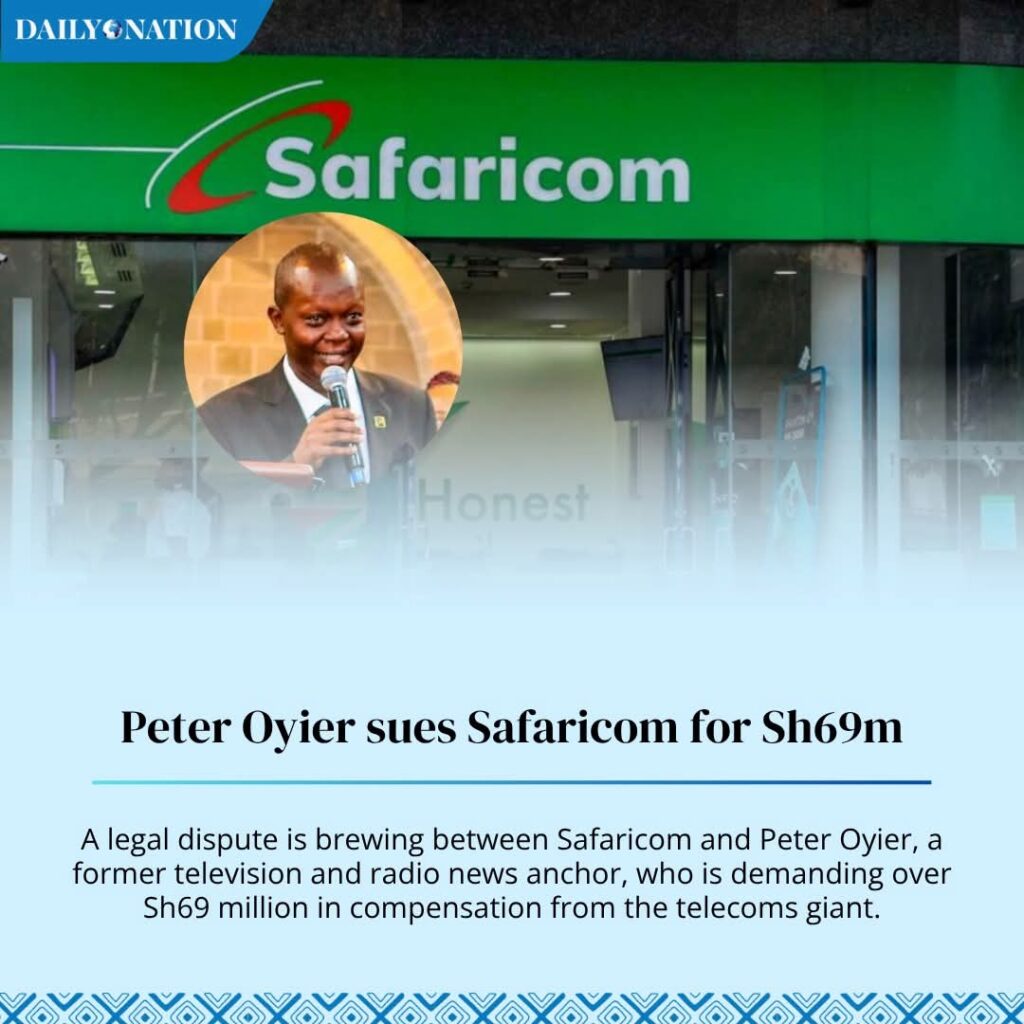
Peter Oyier, a well-known former news anchor and voice artist, has gone to court to fight Safaricom over the use of his voice recordings.
He is accusing the company of continuing to use his voice in their systems without paying him after their contracts ended.
The total amount he is asking for is Sh69,281,729. According to him, he worked with Safaricom from 2018 to 2022 through an agent called MGM Studios.
His voice was used in different services like Safaricom Platinum Audio, Neo Home, and Line 400 Revamp. Each of these projects had a two-year agreement.
But Oyier says that even after those contracts ended, Safaricom still used his voice without asking for permission or making any payments.
This legal battle is about more than just money. Oyier says that continuing to use his voice without consent has hurt his chances of working with other companies.
Because people associate his voice with Safaricom, other firms don’t want to hire him. He also points out that the work he did was not easy it involved long hours and scripts in both English and Kiswahili.
He says that while Safaricom has been making billions in revenue, they have ignored his rights and refused to treat him fairly.
He even tried reaching out to Safaricom through his lawyer to resolve things peacefully, but nothing came out of those efforts, which led him to file the lawsuit.

Safaricom, on the other hand, says they don’t owe him anything. They claim that there was no direct contract between them and Oyier since the deals were done through MGM Studios.
They argue that they are not responsible because there was no official agreement with Oyier himself.
However, many people feel this response is weak, especially given how rich and powerful Safaricom is.
A company that makes over $3 billion a year should be in a position to compensate people who help build its image and services.
This case is shining a light on a problem that many creatives in Kenya face. Big companies use their work and talent but often avoid paying them properly or giving them the recognition they deserve.
Many voice artists, actors, musicians, and other creators are afraid to speak out because they fear being blacklisted or ignored by powerful firms.

Oyier’s decision to take legal action might encourage others to come forward and stand up for their rights. It also shows the need for stronger rules and protections for intellectual property and creative work in Kenya.
This is not just a fight between one man and a big company. It is a test of how Kenya treats the people behind the voices, sounds, and images that many businesses depend on.
Whether Oyier wins or loses, this case has already raised important questions about fairness, respect, and how creatives should be treated in a country that claims to value innovation and talent.













Add Comment