






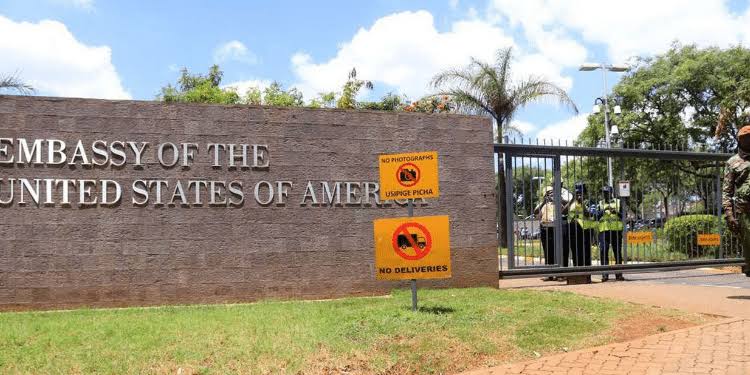

The US Embassy in Nairobi is facing growing criticism over how it handles visa applications, especially after the rise of the #VisaIn60Seconds campaign on social media.
Many Kenyans now feel that applying for a visa has become an expensive and frustrating process, with very little chance of success.
Despite submitting all required documents and paying high fees, applicants often find themselves denied within seconds.
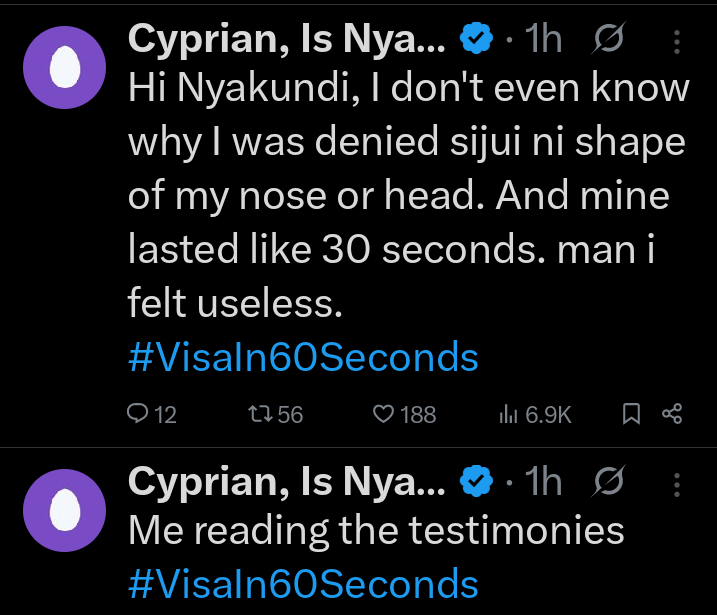
The campaign has brought attention to the experiences of people who believe the system is biased, unwelcoming, and lacks transparency.
Cyprian Is Nyakundi, one of the loudest voices in this campaign, has openly accused the US Embassy of running what he calls an “extortion syndicate.” He argues that the embassy is collecting millions from visa fees only to reject most applications without offering clear reasons.
His posts describe the Nairobi embassy as a “serious crime scene,” where hardworking citizens, doctors, businesspeople, and students are treated with disrespect and dismissed in less than a minute.

According to Nyakundi, it’s not just about security anymore, it’s about power and profit hidden behind strict rules.
Several Kenyans have shared similar experiences. Two Nairobi doctors invited by a senior US citizen paid all the necessary fees and submitted documents proving they had strong ties to Kenya.
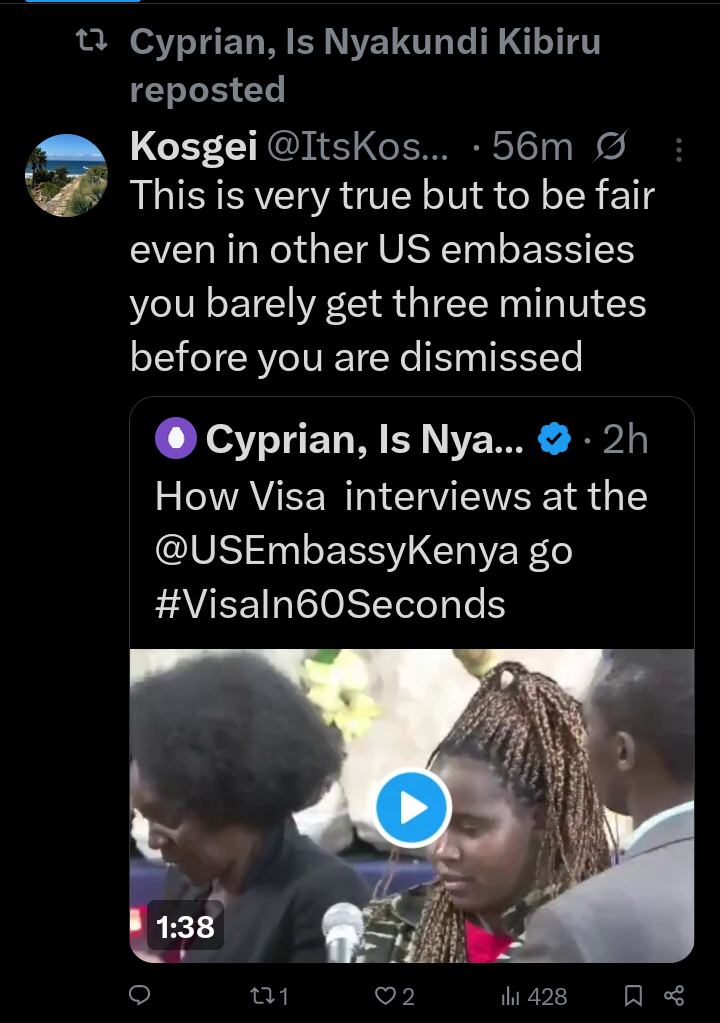
They had jobs, a place to live, and a clear reason to return. Still, they were denied on the grounds that they lacked enough evidence of returning home.
For many, this has become a common outcome, leading to suspicions that the embassy is not serious about even reviewing the documents applicants bring.
The embassy claims that its rules are based on American immigration law, and that their officers look for signs of strong ties to the applicant’s home country.
They also insist that recent requirements like sharing social media accounts help with vetting and security. But to many Kenyans, these policies only add confusion, stress, and fear that even their online presence could cost them a visa.
Being forced to make social media accounts public only makes things worse, with applicants feeling as though they are being spied on before even stepping into the embassy.
What is most troubling is the speed at which interviews are conducted. Many say the meetings barely last a minute, and applicants walk out without any explanation.
There is no room to explain, no room for discussion. People feel judged before they even speak. And with no clear feedback after being denied, it becomes difficult for applicants to improve or understand what went wrong.
The embassy simply keeps the money and moves on to the next person. This situation is damaging to the image of the US as a fair and open country.
While protecting national security is important, treating people with fairness and respect should not be optional.
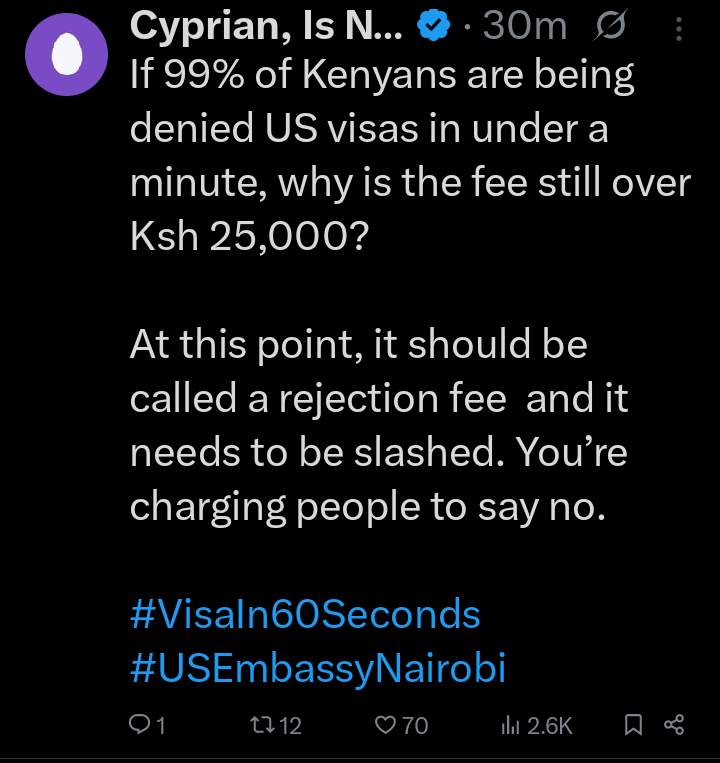
The Nairobi embassy’s approach has led to frustration, distrust, and even anger. It seems like the system is more interested in making money than in allowing genuine travelers a fair chance.
Many are calling for a full review of these procedures and more openness about how decisions are made.
Unless the embassy addresses these concerns, the perception will remain that it operates more like a money-making machine than a fair visa processing center.
For now, many Kenyans are left feeling cheated, unheard, and disrespected by an institution that should stand for justice and equality.














Add Comment