






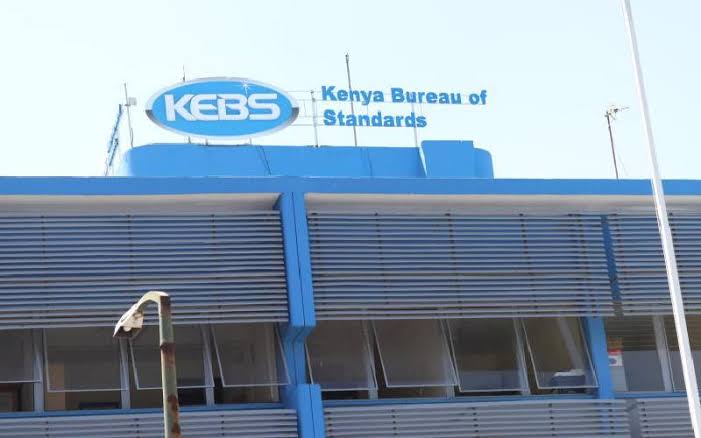

The Kenya Bureau of Standards (KEBS) is once again caught in the middle of a scandal that raises serious questions about how such an important institution allowed a massive extortion racket to thrive under its name.
While KEBS now claims to have disowned a rogue firm called Multi-Works and Rights Enforcements, the damage is already done. Small businesses across Kenya have been harassed, intimidated, and robbed in broad daylight by people claiming to be KEBS inspectors.
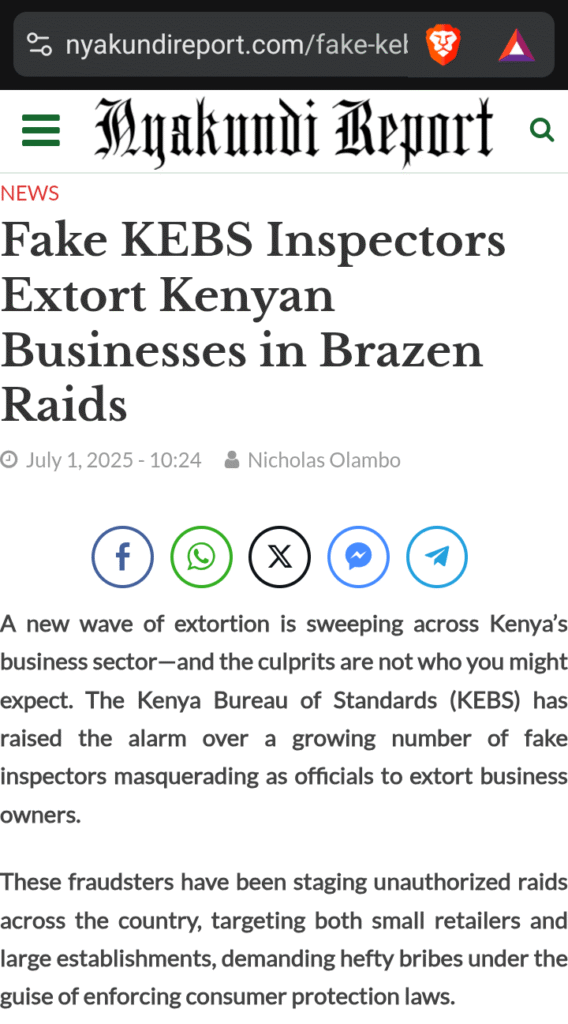
From Bomet to Mombasa, the pattern is the same men dressed in what looks like KEBS uniforms, arriving in branded vehicles, threatening shop owners, and collecting bribes of up to KSh20,000.
And all this happened while KEBS sat back until the outcry became too loud to ignore.What’s worse is that these fraudsters managed to operate freely for weeks, even using a cancelled gazette notice to justify their actions.
That raises serious concerns. How did a private company get hold of KEBS documentation?
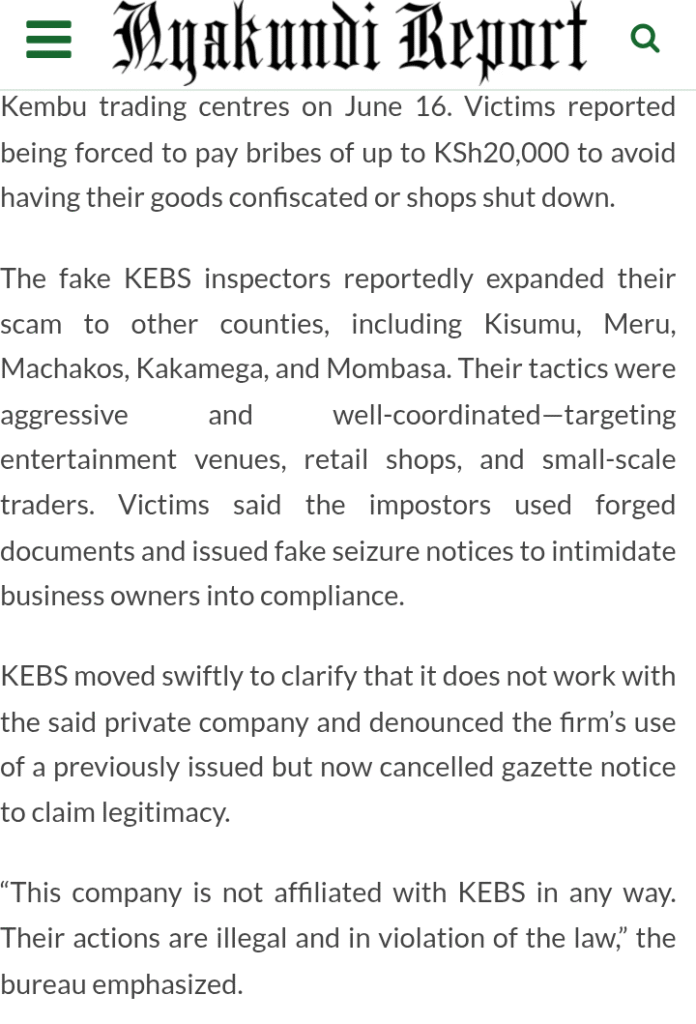
Why wasn’t the public warned earlier about this cancelled notice? KEBS only issued a public statement on July 1, long after the fake inspectors had terrorised traders in Longisa, Merigi, Kembu, and many other places.
For a government agency that claims to protect consumers and regulate market standards, this level of delay and negligence is unacceptable.
Some victims, like a shopkeeper in Machakos, were so intimidated by the impostors that they handed over cash without a second thought. These criminals looked official, spoke with confidence, and even presented fake IDs.
They knew exactly what to say and how to scare their targets. That kind of coordination doesn’t just happen overnight. It suggests a deep and organised criminal network that could only succeed if KEBS systems are weak, compromised, or both.
KEBS is now teaming up with the Directorate of Public Prosecutions and the police to arrest the culprits. But that response feels like too little, too late. If KEBS had done its job from the start by actively monitoring the misuse of its identity, tracking down forged IDs, and following up on the cancelled notice this entire extortion wave might have been avoided.
Instead, businesses were left exposed, with no immediate help from the very agency meant to protect them.

Even now, KEBS is shifting blame rather than taking responsibility. The bureau keeps telling business owners to be more vigilant, to check IDs, to report suspicious activity. But why should the burden fall on small traders?
These are people trying to make an honest living, not trained investigators. It’s KEBS that should be leading the charge against fraud, not relying on victims to do their job.
Until KEBS fixes the loopholes that allowed this mess to happen and holds its own people accountable for the chaos, it cannot be trusted.
Issuing statements and pointing fingers won’t undo the fear, the losses, and the frustration faced by Kenyan business owners. KEBS must clean up its house before lecturing others on compliance.














Add Comment